
The Story My Family Carried
John and Silvia Webber
-
## I. THE NAME ON THE MAP
The town on the map says Webberville.
But that word is not the whole story.
It is only a chapter—
a beginning that was never an ending.
The founders were John Ferdinand Webber
and Silvia Hector Webber.
To the world, their names are history.
To me, they are simply John and Silvia—
the ones whose courage
wrote the first line of our family’s book.
---
## II. TWO LIVES, ONE DEFIANCE
John, a white man from Vermont,
veteran of the War of 1812,
left the strictures of the North
for Austin’s Colony in 1823—
a doctor without a license,
a smuggler posing as healer,
a man who carved a frontier
of his own conviction.
Silvia, a Black girl
born into chains in Spanish West Florida, 1807.
Sold at nine.
She lost her mother, Sarah.
She may have lost another kin—Hector—
a name that lingers like a shadow.
At twelve, the ledger took her again:
“one girl, Silvia, $550.”
Carried west,
into Arkansas,
into the unknown.
But even as the world tried to unmake her,
she carried forward the seed of freedom.
Her freedom was not granted.
It was seized—demanded—
and defended in love.
Their union was never convenience.
It was rebellion.
---
## III. THE PRAIRIE HOUSE
Smithwick, the neighbor who wrote it down,
called John “Doctor,”
called Silvia only “Puss.”
Even in witness,
the ink carried prejudice.
But his pen could not hide the truth:
their home stood as refuge and fortress
on the Comanche frontier,
and at the edge of white suspicion.
Too Black for the settlers,
too white for the freed.
Their children barred from schools,
their family shunned.
And yet—
Silvia opened her door to strangers,
fed the orphan,
clothed the traveler,
refused to return hatred with hunger.
---
## IV. EXILE FROM THE NAME
The town they founded
turned against them.
In 1853, a tutor’s arrival
nearly sparked a mob.
The whisper became warning:
Leave, or face the fire.
So they sold the land that bore their name,
exiled by neighbors—
driven not by failure,
but by fidelity to family.
---
## V. THE BORDERLAND SANCTUARY
Southward they traveled,
to Hidalgo County,
where river bends widen into promise.
Nine thousand acres—
the Webber Ranch—
a new beginning on older soil.
Here, Silvia’s compassion
became liberation.
The seed she carried
became a shelter.
Here, John ferried souls across the Rio Grande,
his license official,
his purpose clandestine.
Together with Matilda and Nathaniel Jackson,
they built a southbound road of freedom—
guiding the weary to Mexico,
a land where chains
were already broken.
---
## VI. A COMMUNITY OF MANY NAMES
Among Mexican families,
they were embraced.
Their names shifted in the records:
John to Juan Fernando,
Silvia to Sylvia.
They bought more land,
wove themselves into the borderland fabric.
When Civil War raged
and Texas seceded,
John stood Union.
In 1863,
he dared to testify before Union officials—
speaking truth
while the Confederacy pressed close.
---
## VII. THE FINAL REST
They lie now in the Webber Family Cemetery,
watching the Rio Grande—
their graves shadowed by a wall
that divides what they once united.
The same river
that bore fugitives into freedom
is now a contested boundary—
a reminder that their struggle
did not end with them.
---
## VIII. THE LEGACY WE CARRY
So when you hear Webberville,
do not stop at the town.
Remember the exile.
Remember the ferry.
Remember the sanctuary
built in defiance of hate.
Our inheritance is not only land,
nor the name etched on maps,
but the courage of John and Silvia—
to love without apology,
to live with unshaken principle,
to carry justice across a river,
even when the world called it crime.
It was Silvia’s hands
that turned loss into sanctuary,
and John’s resolve
that held the line.
This is the story my family carried.
This is the story I now defend.
And it is the story I charge the world to remember.
Description text goes here
-
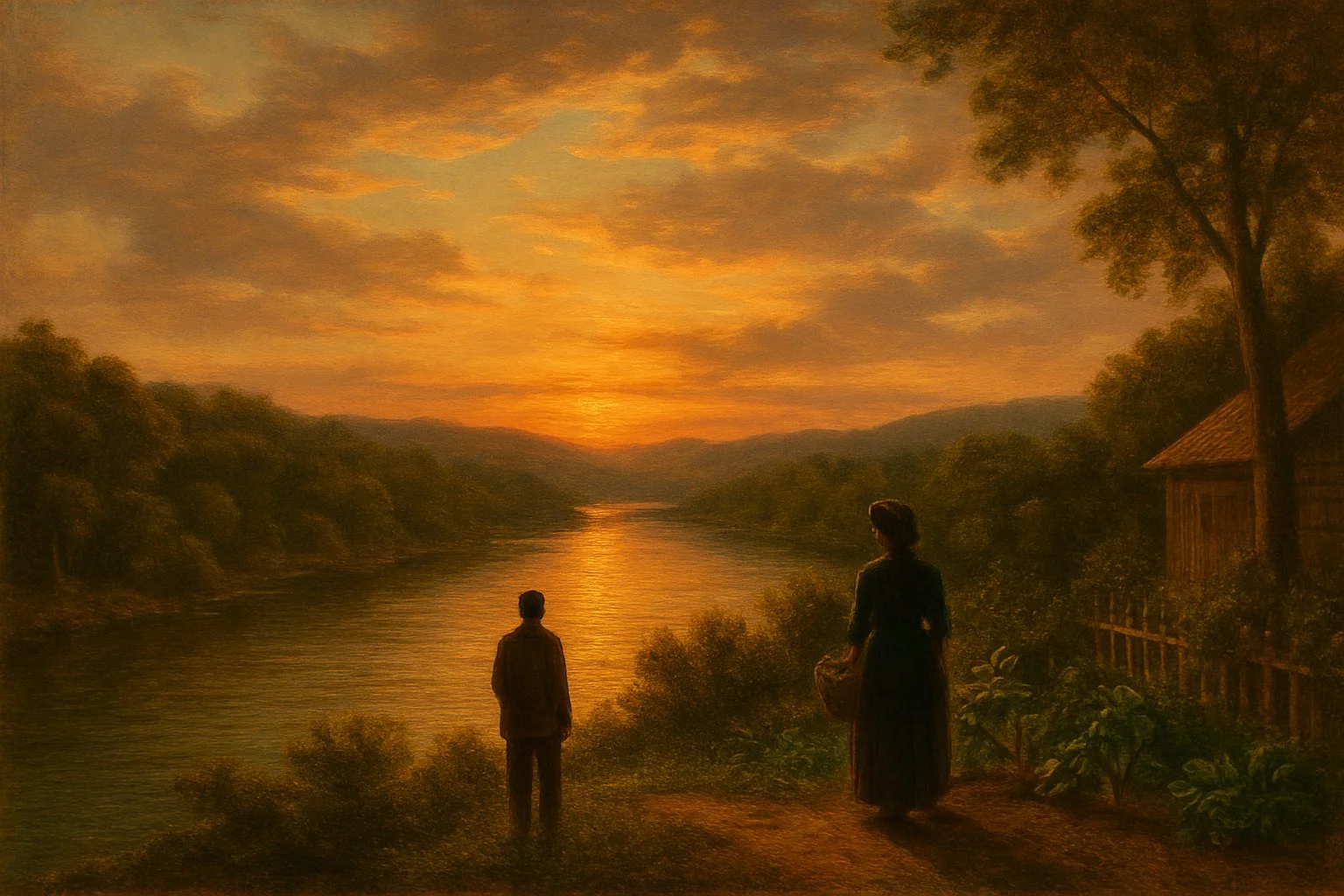
The world that shaped John Ferdinand Webber — from Vermont’s reformist culture
to the early borderlands where he first encountered Silvia.
This pillar leads into:
• The Inheritor (moral origins)
• Law & Love — Mississippi River section
-
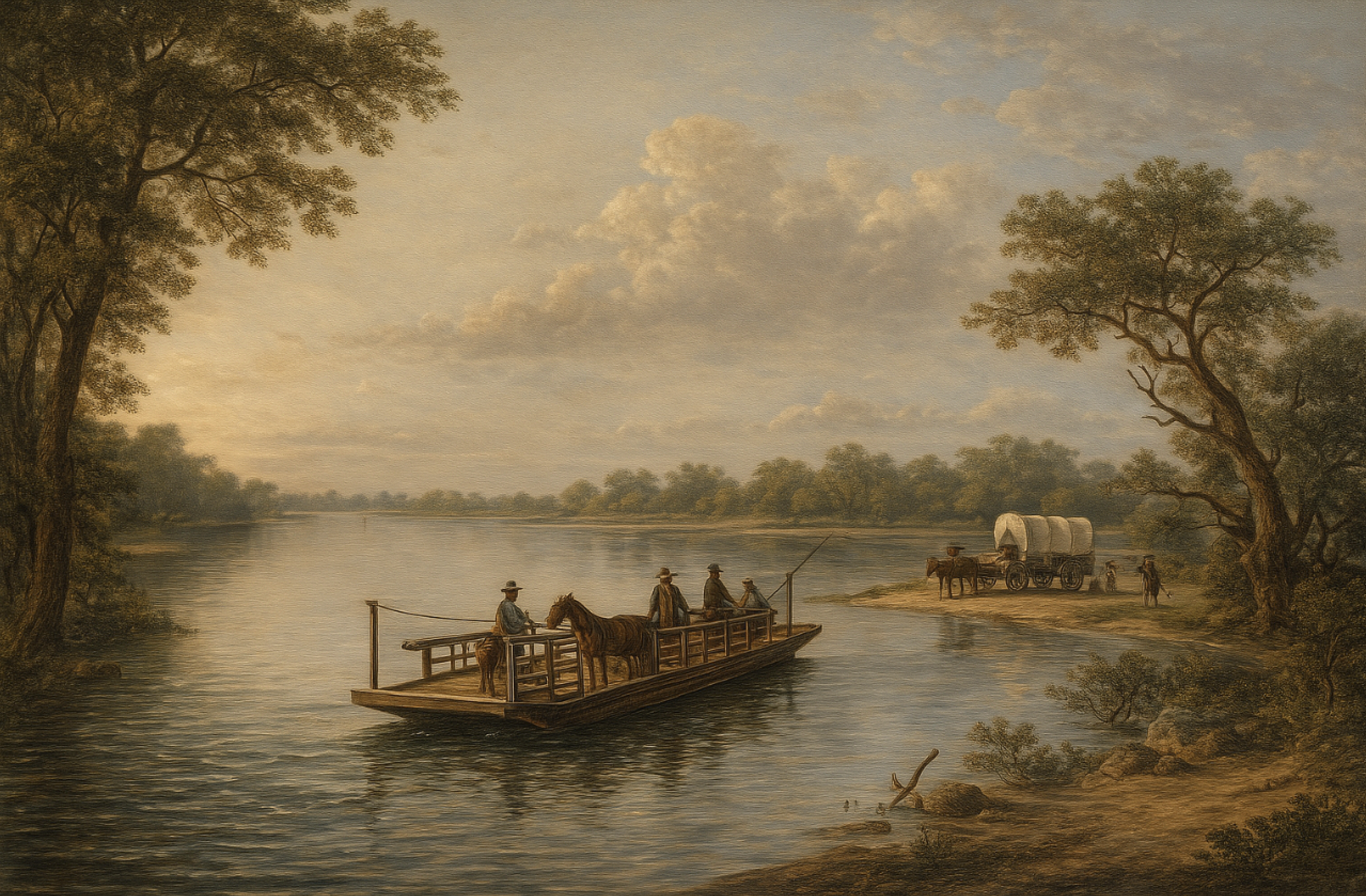
The Webbers' life on the Colorado: freedom-seeking, family-building,
and the conflicts that forced them into exile.
This pillar leads into:
• Law & Love — Colorado River section
• A Family Rooted in Freedom & Community
-
Exile became sanctuary. On the Rio Grande, the Webbers built the compound,
operated the ferry, and protected freedom-seekers.
This pillar leads into:
• Law & Love — Rio Grande section
• The Hidalgo Compound
• Outcasts of the Land (novelette)
Stories Within Each Pillar
Pillar 1 — Early Life & Moral Foundation
Stories that belong to this pillar:
- The Inheritor: John Ferdinand Webber & the Conscience of a Frontier
- Law and Love: Defiance Across Three Rivers — Mississippi River Section
Pillar 2 — Texas Frontier Choices
Stories that belong to this pillar:
- Law and Love: Defiance Across Three Rivers — Colorado River Section
- A Family Rooted in Freedom and Community (Webberville years & 1850 census)
Pillar 3 — Rio Grande Legacy
Stories that belong to this pillar:
PATHWAY 1 — Historical Narrative
Webber’s Documented Journey
-
### Included Stories
- Law and Love: Defiance Across Three Rivers
Flagship chronological narrative following the Mississippi, the Colorado, and the Rio Grande.
- The Story My Family Carried
A descendant’s poem that opens the collection and frames the historical journey.
- Love & Resistance: The Webber Journey
Interactive timeline (1786–1892) connecting family events to broader history.
PATHWAY 2 — Ethical Analysis
Frontier Conscience & Decision-Making
-
### Included Stories
- The Inheritor: John Ferdinand Webber & the Conscience of a Frontier
Philosophical prequel tracing the moral and spiritual inheritance that shaped Webber’s choices.
- Legal & Historical Essays
Focused studies on Webber’s court cases, property law, and the shifting legal landscape on the Texas frontier.
PATHWAY 3 — Family Legacy
The Webber Family After 1853
-
### Included Stories
- A Family Rooted in Freedom and Community
A descendant’s narrative built from the 1850, 1870, and 1880 U.S. census records.
- Outcasts of the Land
Historical novelette that braids Noah Smithwick’s memoir with family memory and descendant voice.
- The Hidalgo Compound: A Community Architecture
Analysis of the 1880 Hidalgo County family cluster as a deliberate design of protection and kinship.
PATHWAY 4 — Scholarly Research
Academic Publications & Sources
-
### Included Works
- The Lineage of Wind and Stone — Trilogy
Volume I: The Soul
Volume II: The Law and the River
Volume III: The Inheritance
- Research Library
Complete footnotes, methodology statement, and full bibliography.
- Document Transcriptions
Emancipation bond, probate ledger entries, land records, and census pages reconstructed from archival sources.
From the Historical Curator
This platform approaches John Ferdinand Webber as a complex historical figure whose choices illuminate broader frontier dynamics and the shifting meanings of freedom on the Texas borderlands.
As both curator and descendant, I present this history not through myth or judgment, but through evidence, memory, and lived connection. I approach Webber not as hero nor villain, but as a case study in frontier morality. His relationships, business decisions, and legal battles offer rich material for historical education.
Alongside him, the life of Silvia Hector Webber reminds us that courage, care, and resistance are equally central to this story. Her legacy—carried across generations—guides how we interpret this history today.
Together, their choices ask us to consider what it means to build family, community, and refuge in a world structured against them—and how those choices still echo across the Rio Grande in the lives of their descendants.
— Historical Programs Director & Webber–Hector Descendant