

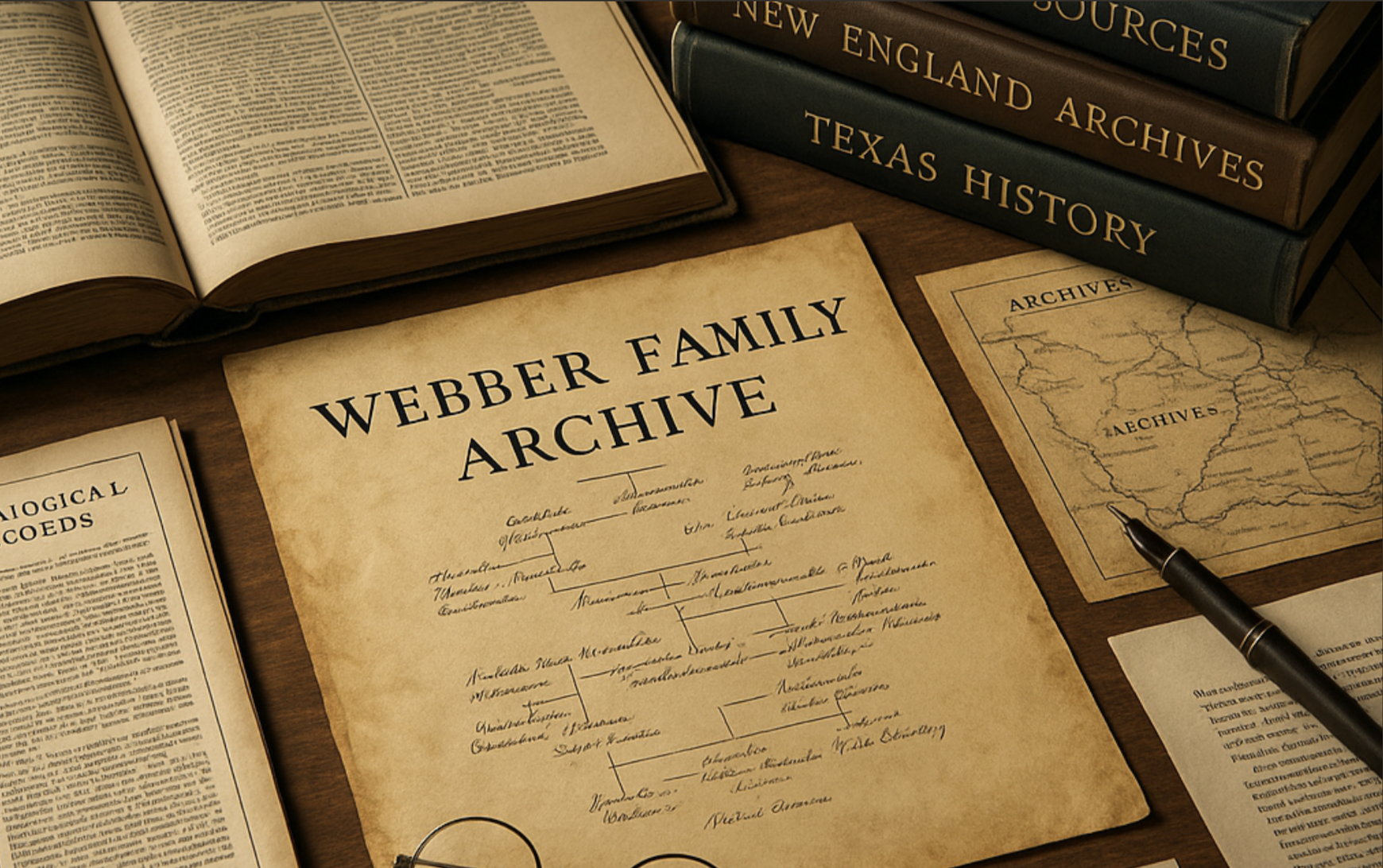
The Archive
Primary Source Documents Behind the Webber Chronicle
Each record contributes verifiable evidence to the intertwined story of John Ferdinand Webber and Silvia Hector Webber—their origins, migration, emancipation, family formation, borderlands refuge, and legacy.
These materials are displayed as non-downloadable archival exhibits. They are accompanied by contextual historical commentary to support educational interpretation.
Below, the documents appear in a curated visual gallery.Expanded explanations follow in the accordion sections beneath.
BEGIN WITH THE ARCHIVAL NARRATIVE
These documents are not isolated records—they form a continuous story of land, law, family, and freedom.
This is where the archive becomes narrative.
About the Archive
This archive is a curated historical collection developed to support the educational narratives presented in The Webber Chronicle. It brings together verified primary source documents relating to John Ferdinand Webber and Silvia Hector Webber, including military records, probate inventories, emancipation bonds, census records, land deeds, and pension files.
The materials displayed here are presented as non-downloadable archival exhibits accompanied by interpretive historical commentary. The archive is maintained as an evolving research project and may expand as additional documentation is identified.
The purpose of this archive is threefold:
• To preserve documented evidence of the Webber family’s historical record
• To provide transparency in sourcing for educational interpretation
• To support continued scholarly and genealogical research
This archive is curated as part of an ongoing descendant-led historical initiative.
ARCHIVAL COLLECTION
-
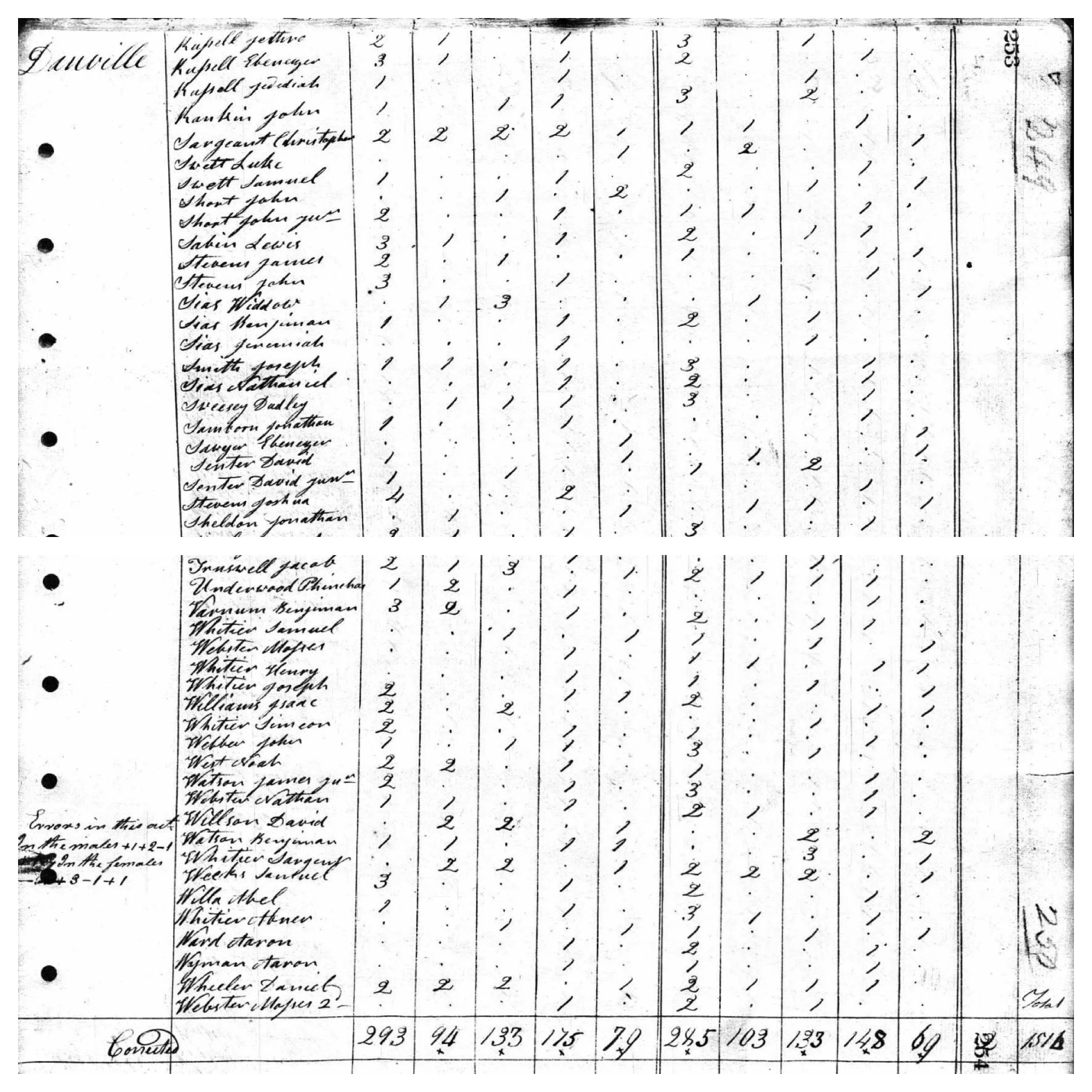
1810 Danville census places the Webber family in Caledonia County, Vermont.
The entry documents John’s early New England environment, agricultural household
structure, and community placement. This census is foundational because it ties
the family to a specific location before John’s migration into the War of 1812.
-
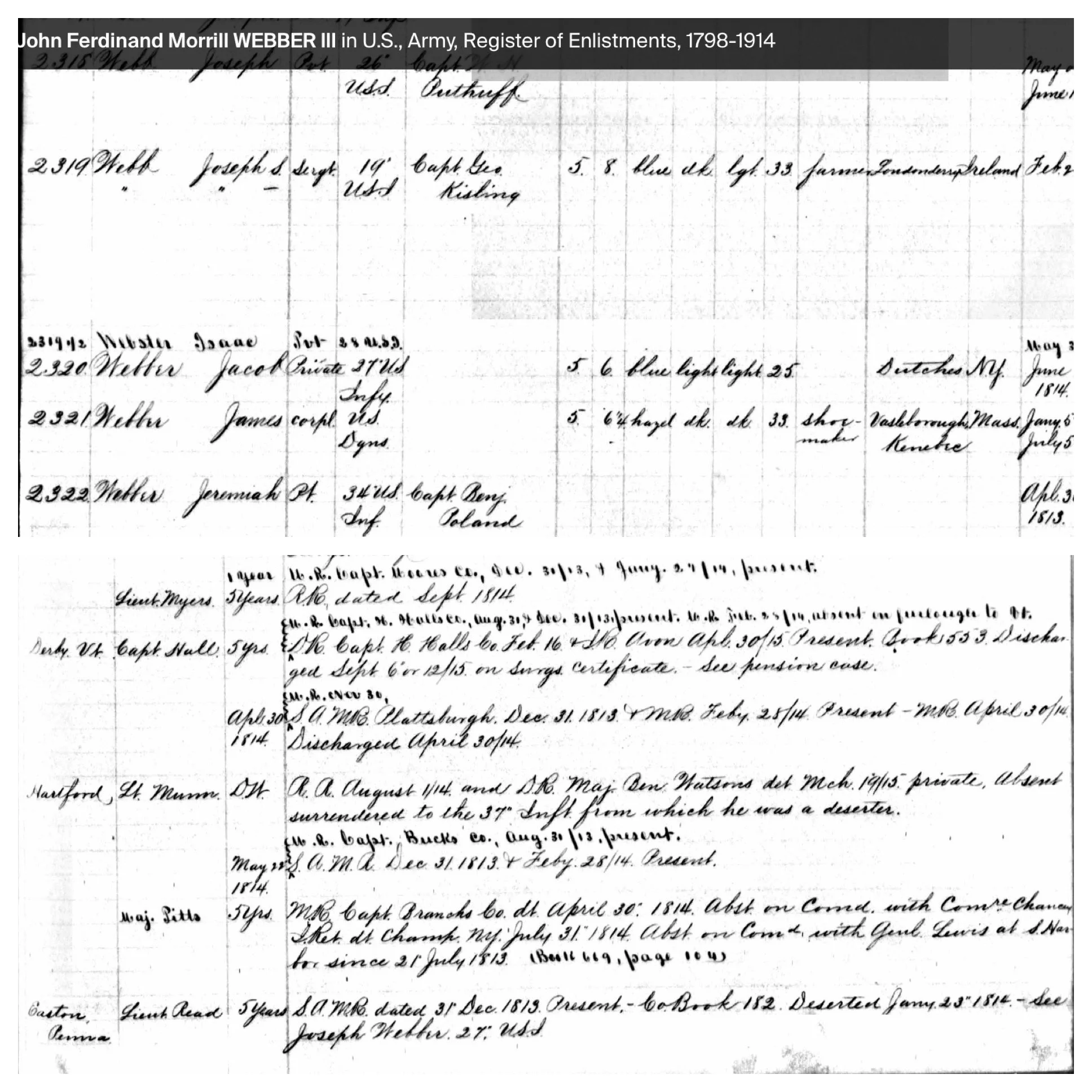
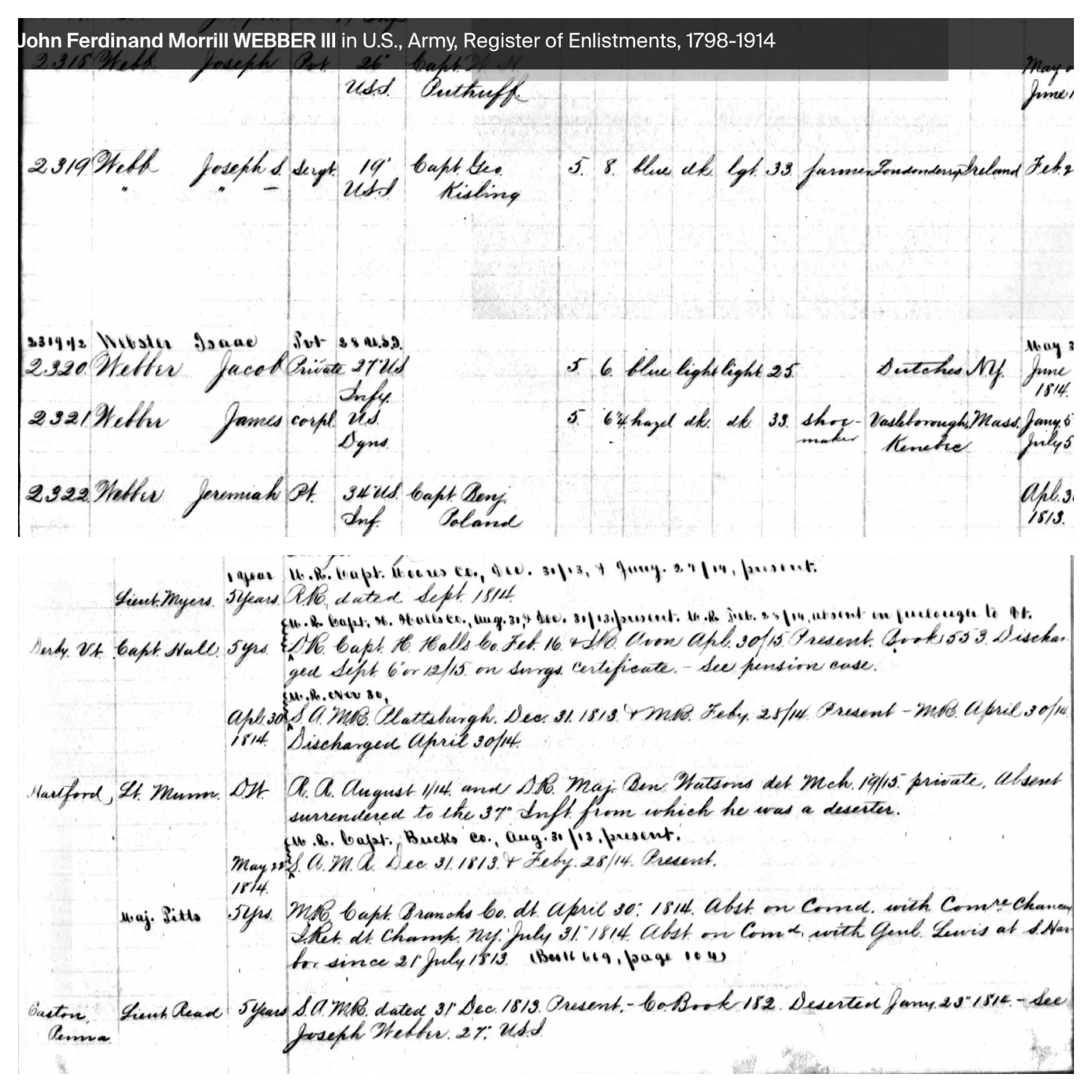
Register of Enlistments entry for John F. Webber, 31st U.S. Infantry.
Caption: Age, birthplace, physical description, and military service unit.
-
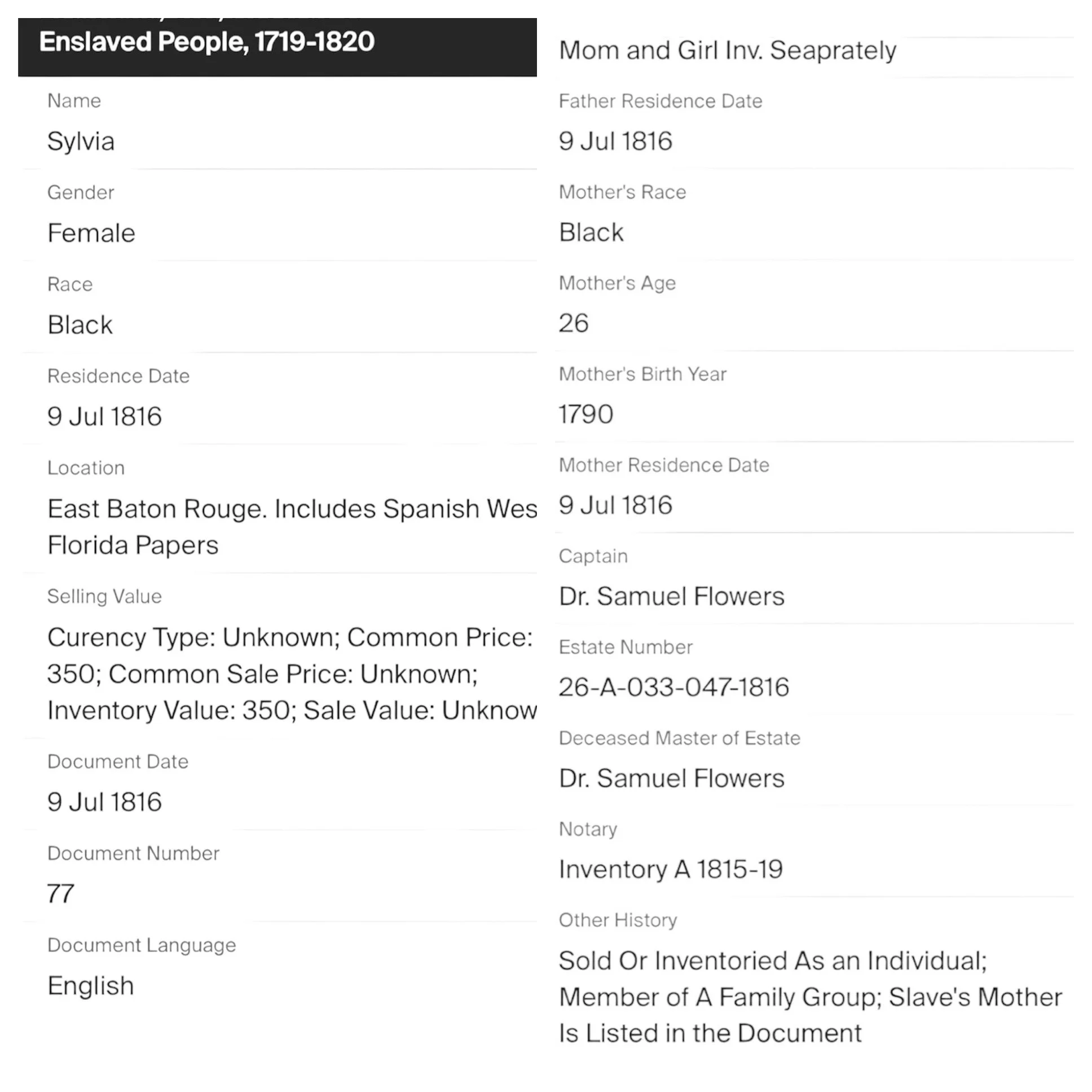
Probate list of enslaved people in Dr. Samuel Flowers’ estate including Sylvia and her mother.
Caption: Ties Sylvia to East Baton Rouge Parish.
-
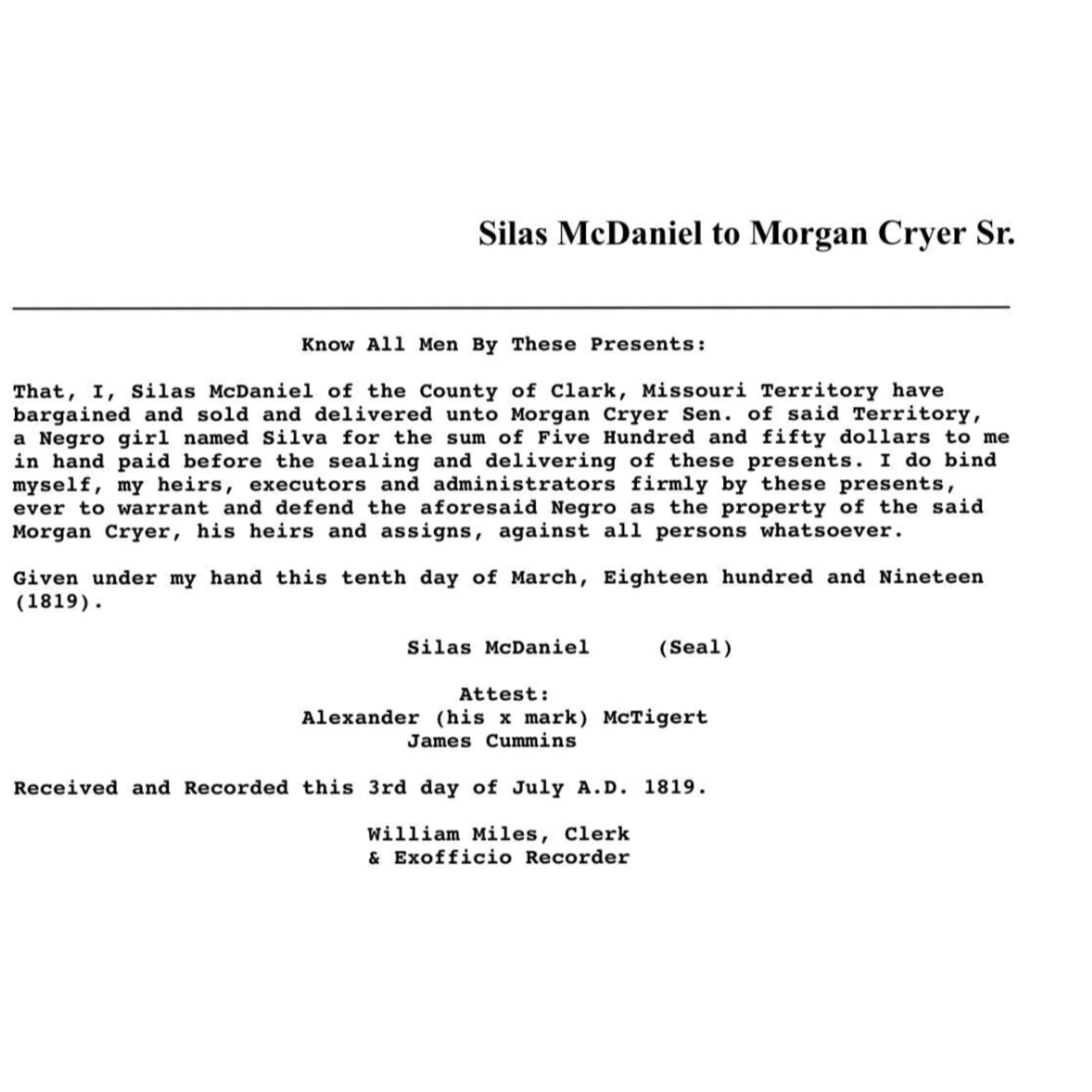
1819 Missouri Territory bill of sale transferring a girl named Silva.
Caption: Brutal record documenting Silvia’s sale as a child.
-
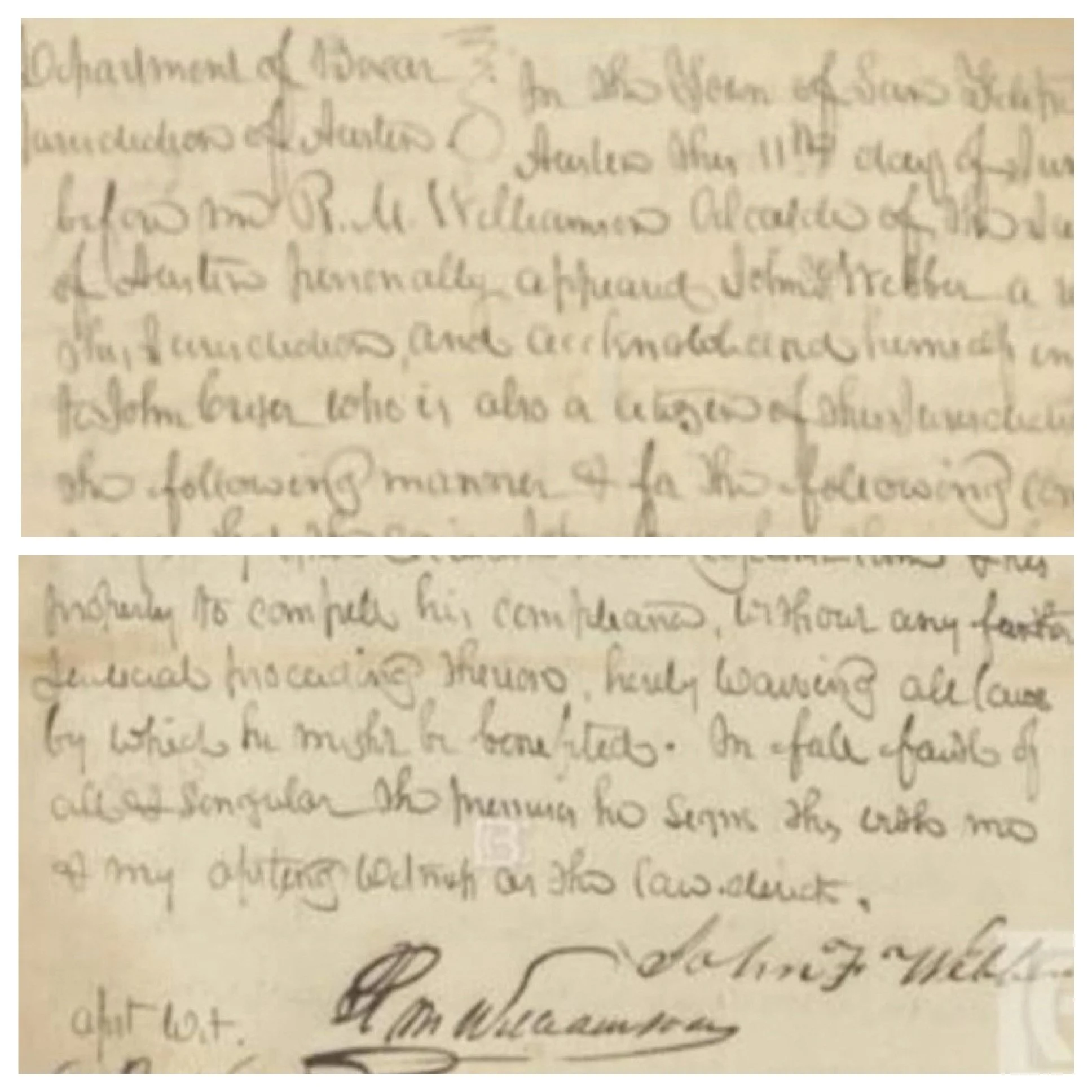
Legal bond executed by John F. Webber in Mexican Texas to secure the freedom of Silvia and their children. Establishes the family’s legal
status prior to the Texas Revolution.
-
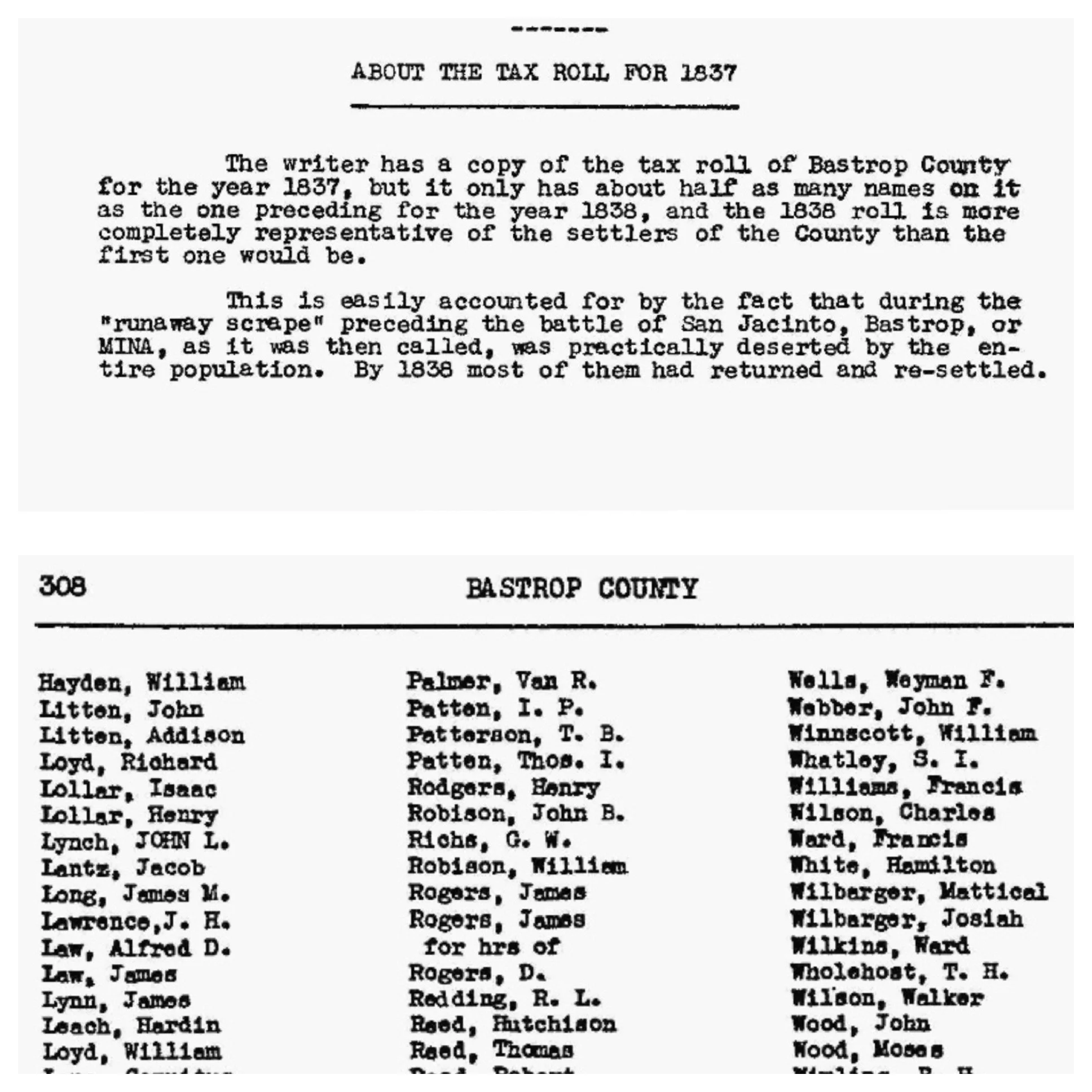
A page from a historical county tax record listing John F. Webber among early settlers. The preface explains that the 1837 population had temporarily fled during the “Runaway Scrape” and returned by 1838.
Relevance: Confirms John Webber’s presence and landholding in Bastrop County before his family was forced into exile for their interracial marriage.
-
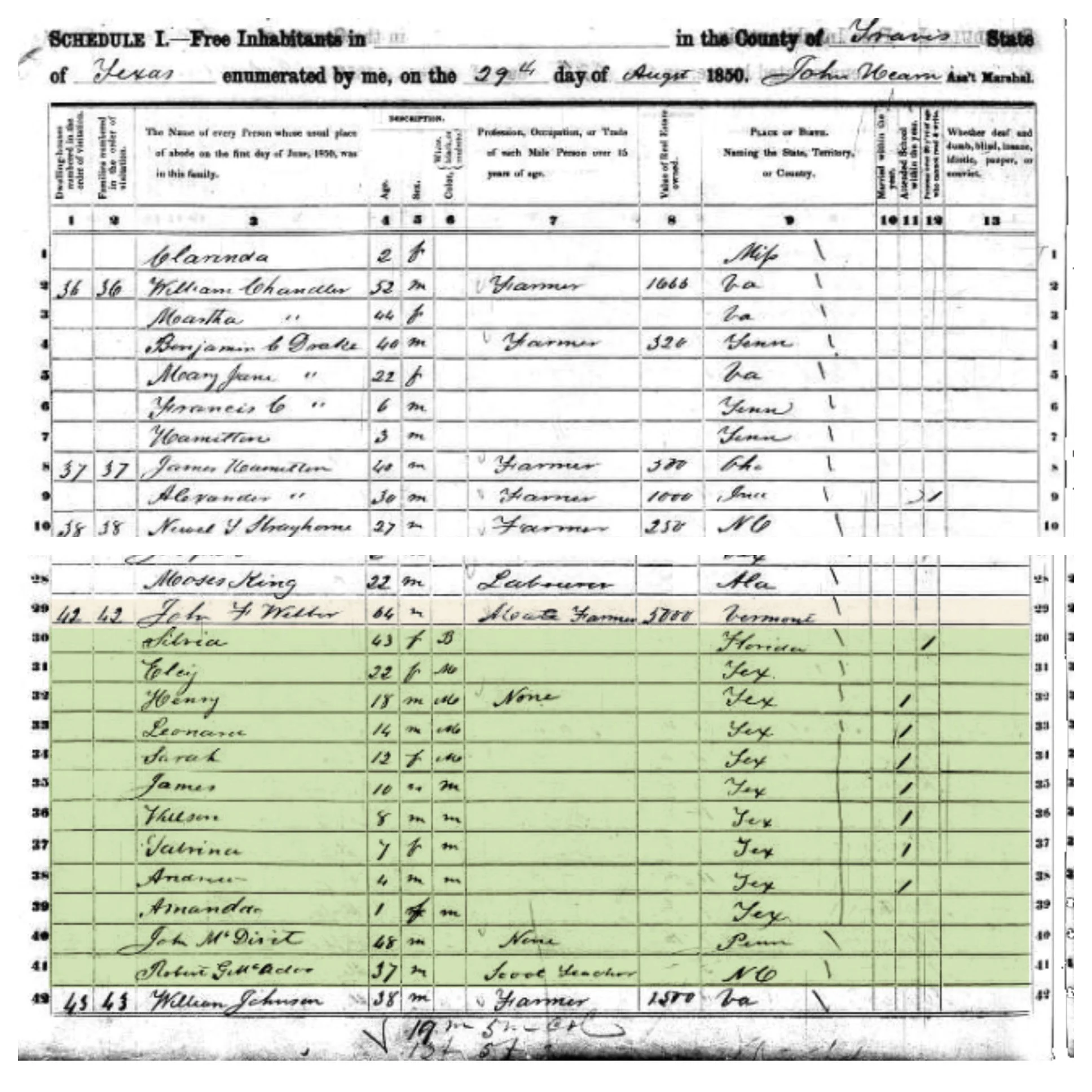
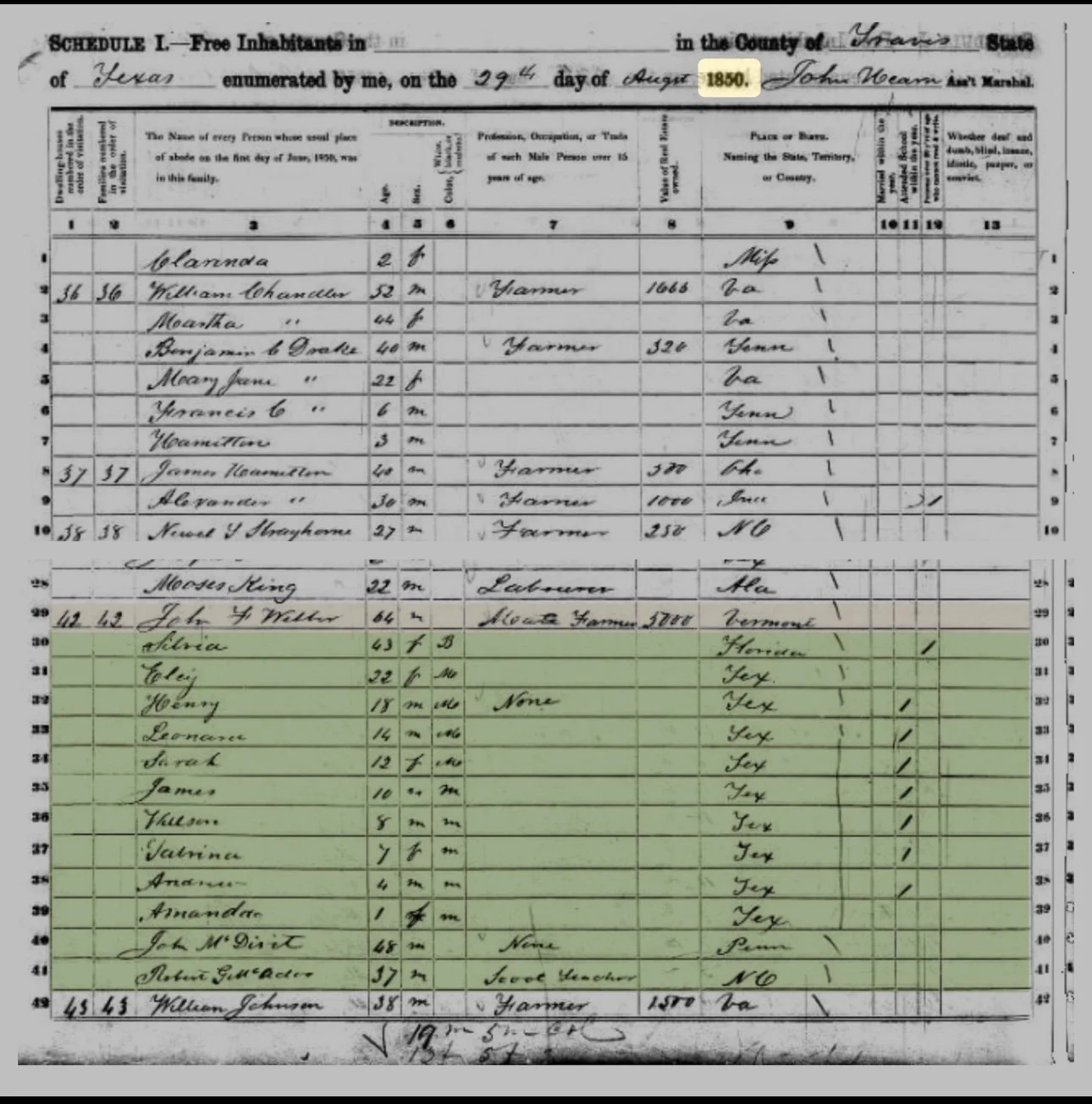
Federal census listing John, Silvia, and their mixed-race children.
One of Texas first census openly documenting the interracial Webber family.
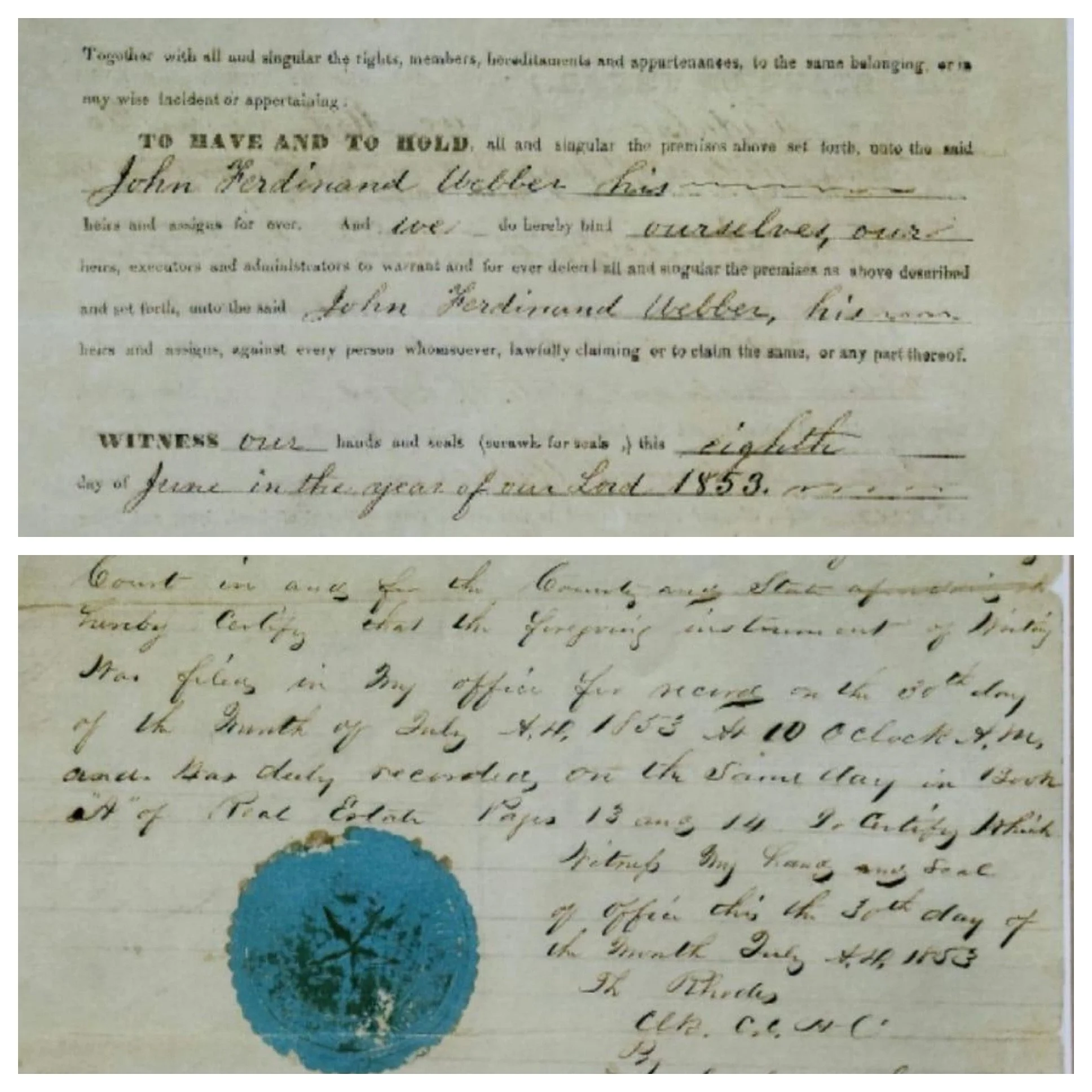
-
1853 deed and county recording related to Webber property holdings.
Establishes settlement trajectory toward the Rio Grande.
-
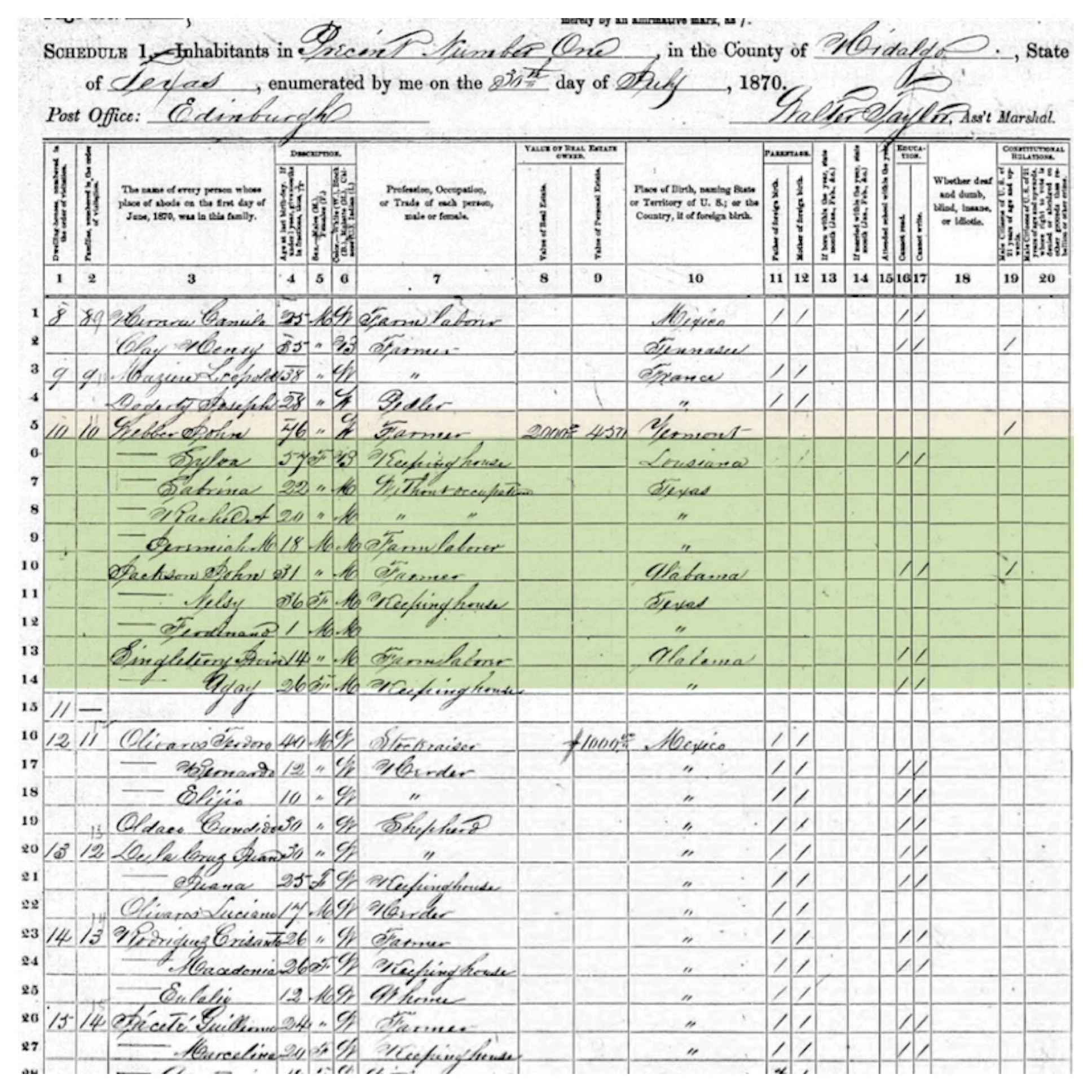
The 1870 Hidalgo County census highlights the Webber household in a predominantly Mexican and Tejano ranching community. Names, ages, occupations, and birthplaces document a multiracial extended family along the Rio Grande after the Civil War.
This page shows who remained on or near the former Webber ranch, how family members identified in terms of race and occupation, and how the community surrounding Silvia’s descendants evolved in the first years of Reconstruction.
Primary Documents & Records
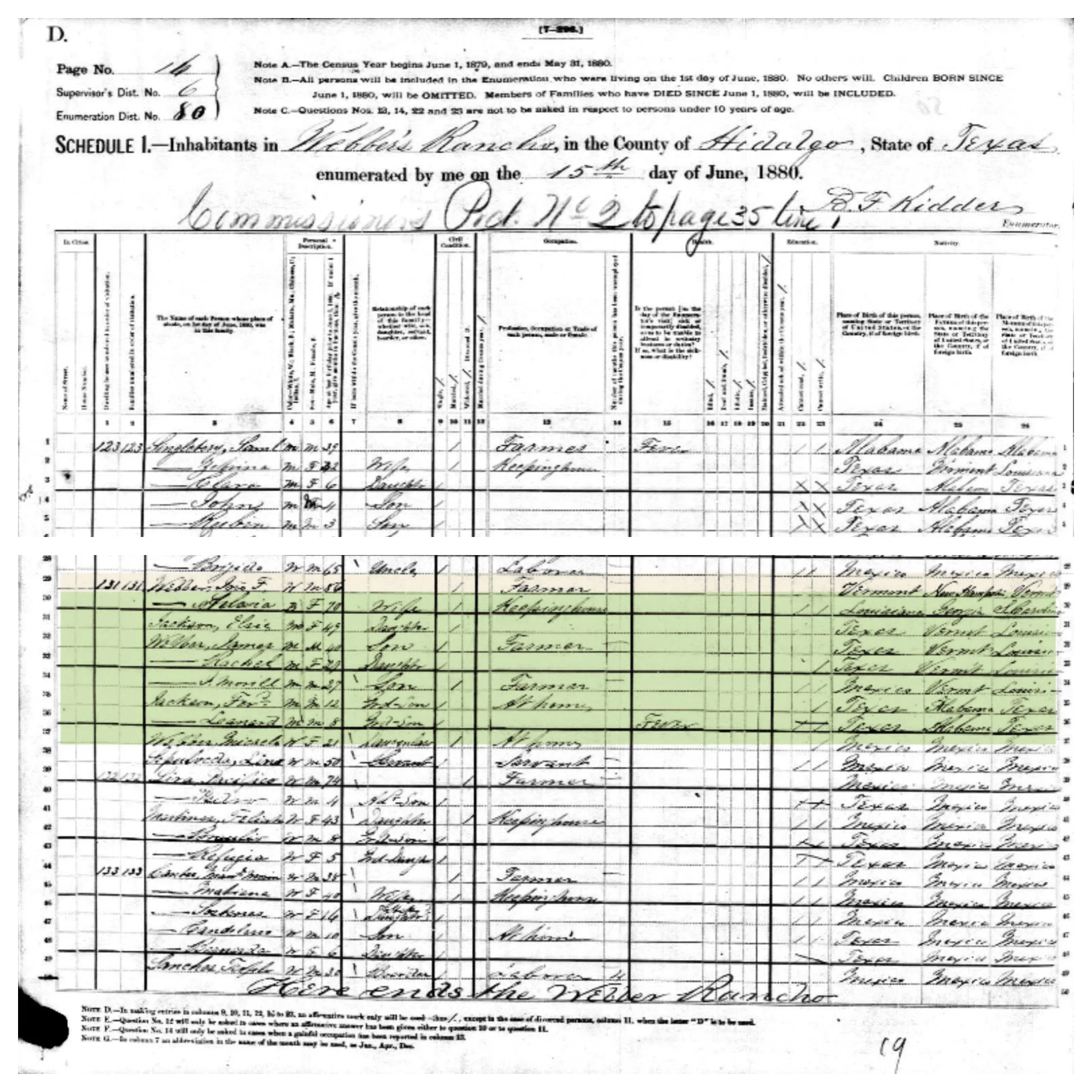
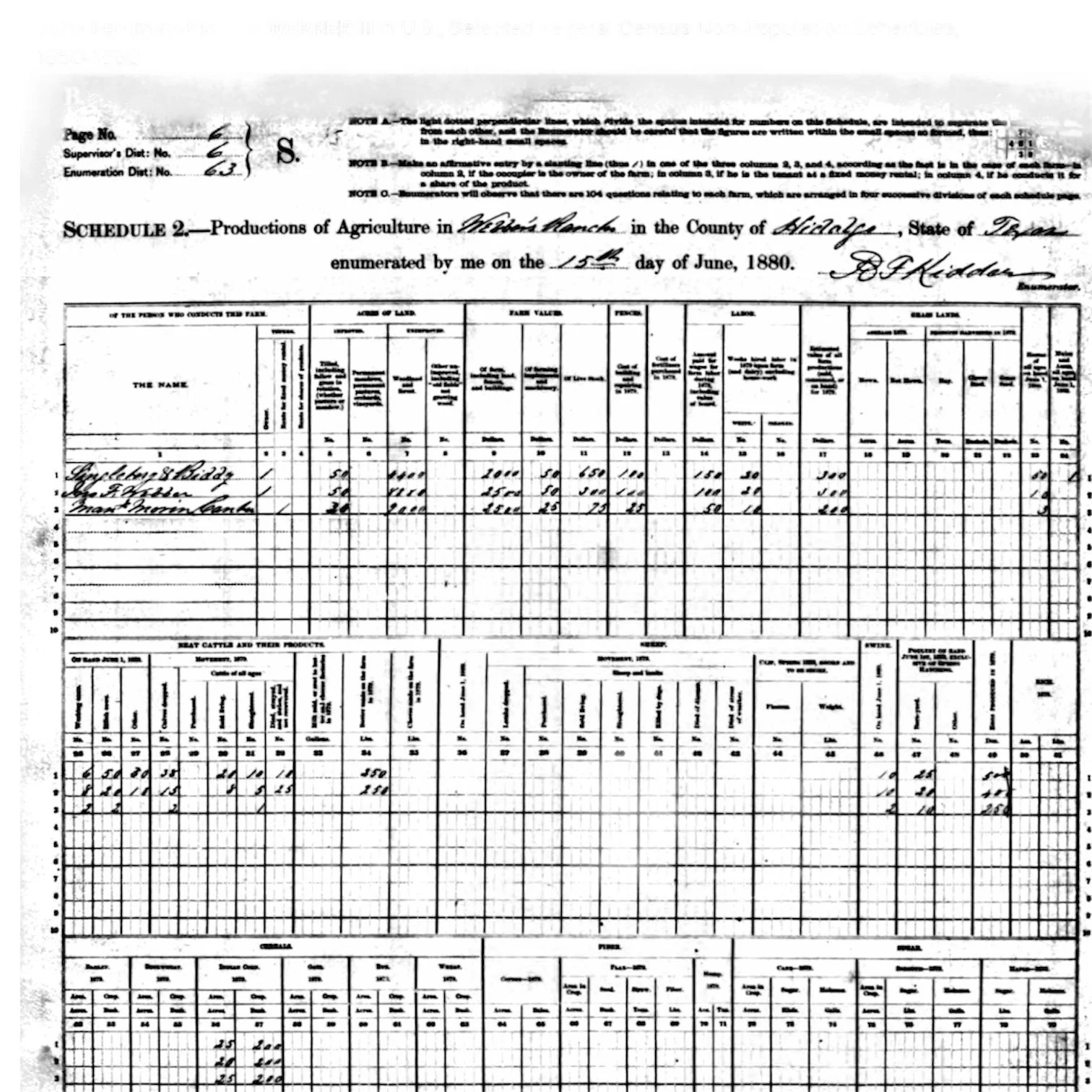
-
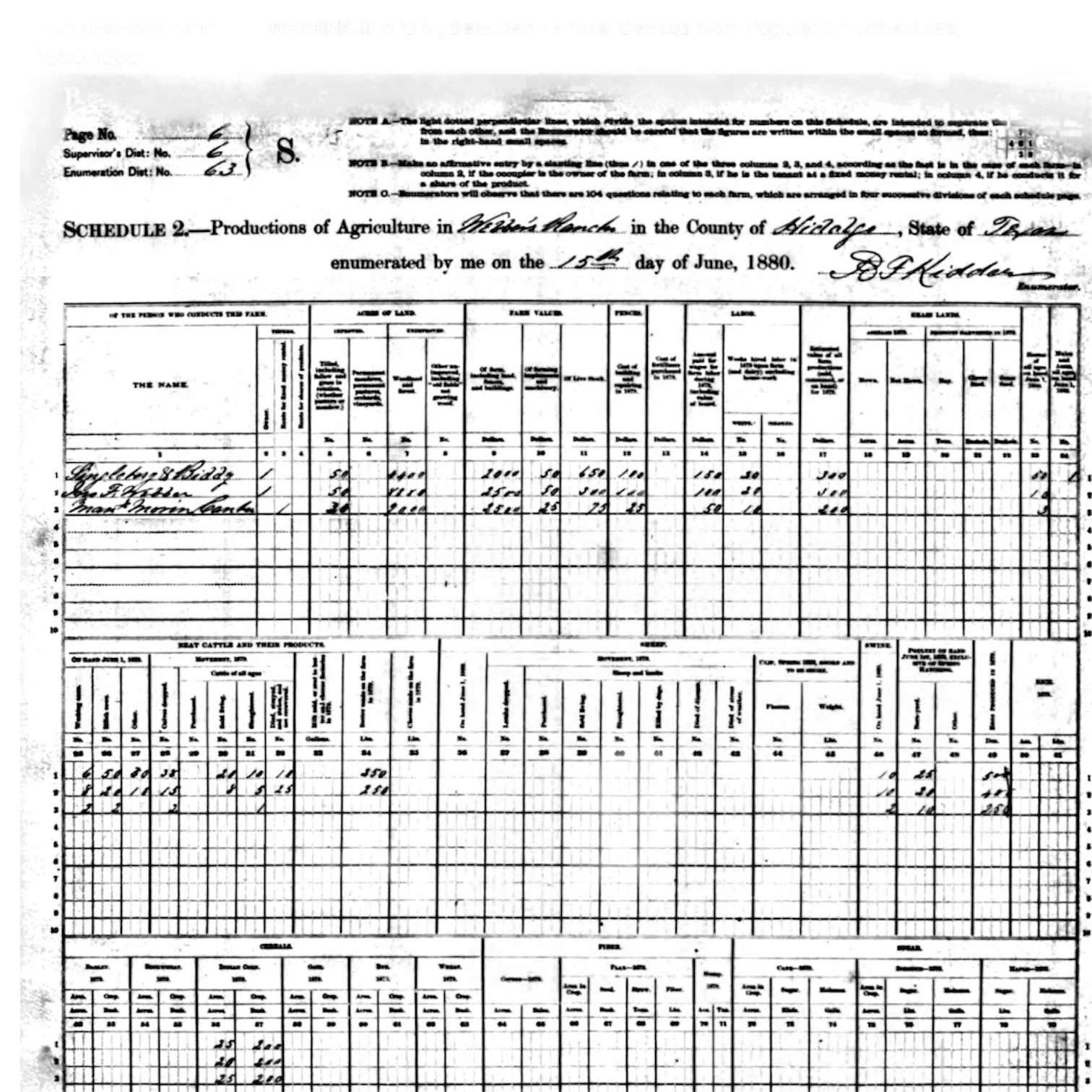
This non-population schedule lists livestock, acreage, and crop yields for ranchers
along the Rio Grande. It shows the scale of the Webber ranch and its economic
role in the local community.
-
Description text goes here
ACCORDION CONTENT — COMPLETE FOOTNOTES & BIBLIOGRAPHY
-
Content:
This section provides full documentation and scholarly framework supporting the archival materials displayed above. The Webber Chronicle is grounded in authenticated primary-source research and contextualized through established historical scholarship and statutory analysis.
Materials are presented as non-downloadable archival exhibits in alignment with International Class 041 educational services.
-
Content
Early Life & Enslavement Records
• 1810 United States Federal Census — Danville, Vermont
• Estate Inventory of Dr. Samuel Flowers (1816)
• Bill of Sale for “Negro Girl Named Silva” (1819)
Military Service & Pension Records
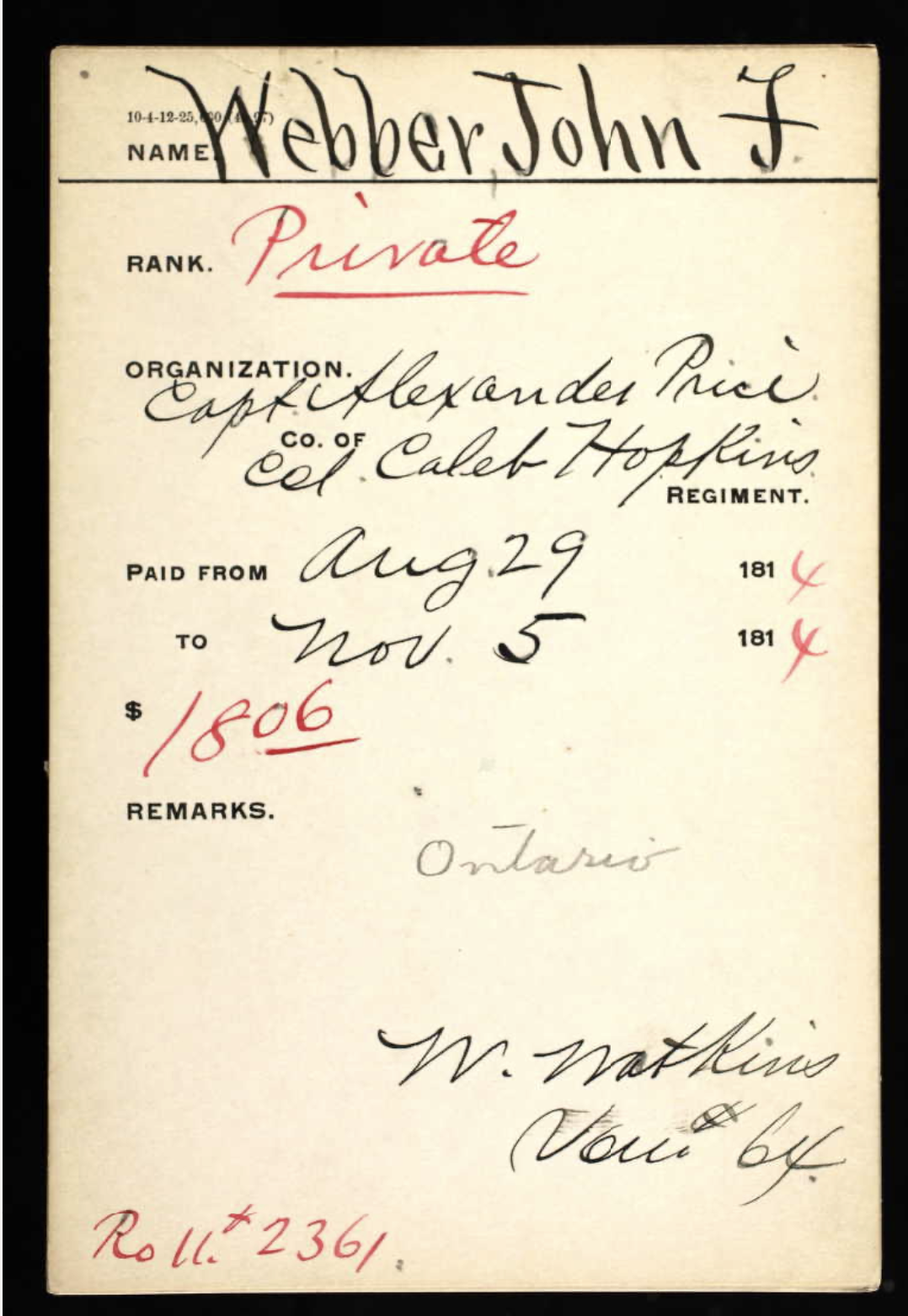
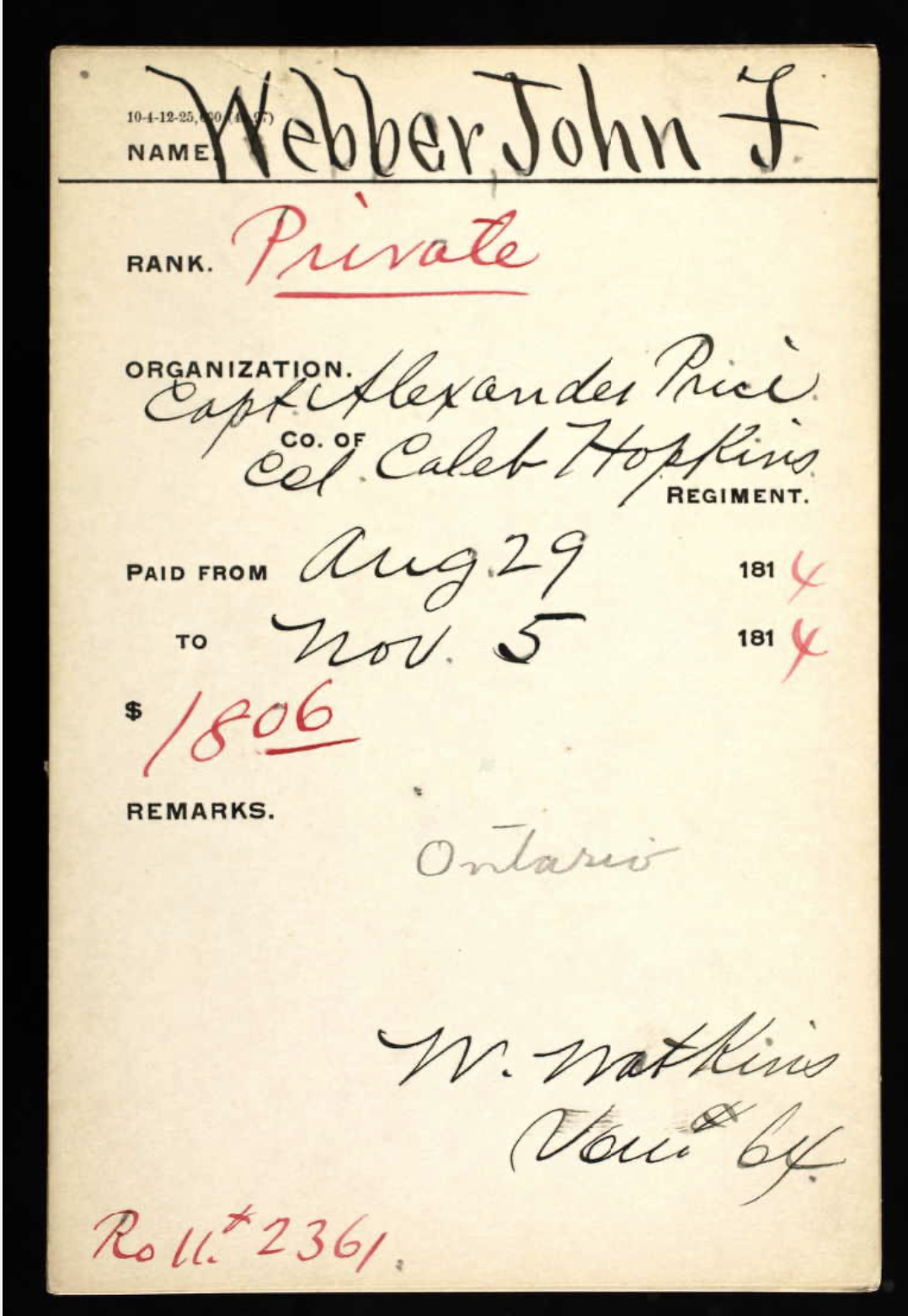
• War of 1812 Enlistment Ledger (1813–1815)
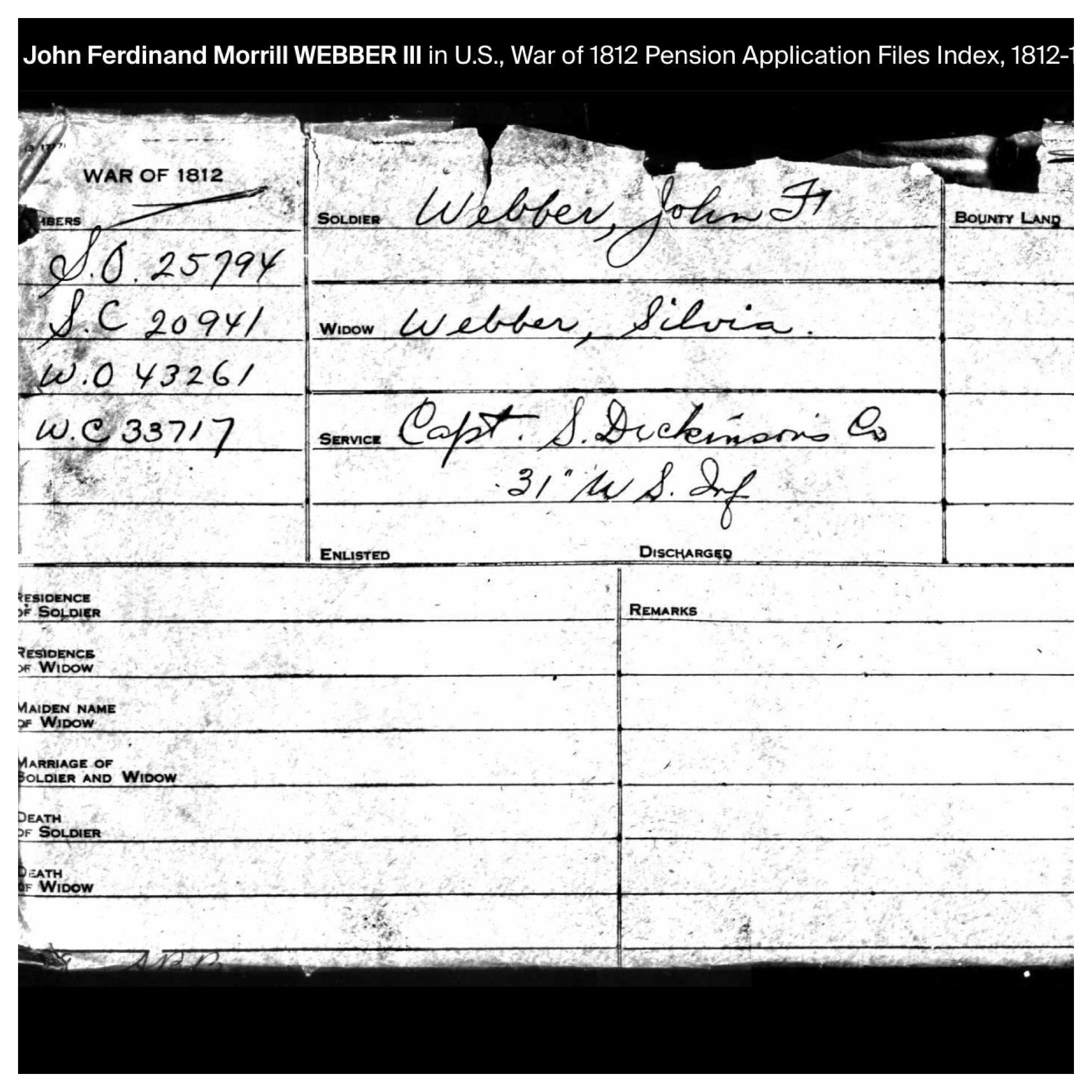
• War of 1812 Pension File — Widow’s Claim
Emancipation & Legal Record
• Manumission Bond for Silvia Hector and Children (1834)
Land, Tax & Property Records
• Bastrop County Tax Rolls (1837–1840)
• Travis County Deed Book F (1853)
Federal Census & Agricultural Schedules (1850–1880)
• 1850 Federal Census — Travis County, Texas
• 1870 Federal Census — Hidalgo County, Texas
• 1880 Federal Census — Hidalgo County, Texas
• 1880 Agricultural Schedule — Hidalgo County, Texas
-
Content:
The interpretive framework of this archive is informed by established scholarship addressing slavery in Texas, borderlands legal history, emancipation practices, racial classification, and nineteenth-century governance.
Key works include:
• Campbell, Randolph B., An Empire for Slavery
• Fehrenbach, T. R., Lone Star
• Berlin, Ira, Generations of Captivity
• Johnson, Walter, Soul by Soul
• Baptist, Edward E., The Half Has Never Been Told
• Miller, Randall, “Slavery and Freedom in the Gulf South”
-
The Webber Chronicle employs authenticated primary-source research corroborated across federal, state, county, and university archival repositories. Documentary evidence—including census schedules, probate inventories, land deeds, military ledgers, and pension records—is cross-referenced to ensure historical continuity and legal accuracy.
Interpretation is grounded in statutory context, borderlands legal history, and established historical scholarship. Digitized reproductions are presented for legibility and educational clarity but are not substantively altered.
All materials are displayed as non-downloadable archival exhibits under International Class 041 educational services.
-
This archive engages directly with statutory and governmental records that shaped the legal environment of the Webber family’s lifetime.
Included are:
Mexican Texas Statutes (1821–1836)
Colonization laws, anti-slavery decrees (including the Guerrero Decree of 1829), and civil codes of Coahuila y Tejas.
Republic of Texas Records (1836–1845)
Constitutional provisions, land grant regulations, taxation statutes, and racial classification policies.
U.S. Census Enumeration Instructions (1850–1880)
Federal guidelines governing racial designation, household composition, and occupational reporting.
War of 1812 Military Regulations
Enlistment standards and pension eligibility requirements under the U.S. War Department.