

Plays* Historical Arts*Plays* Historical Arts*
-
Title Page & Production Notes
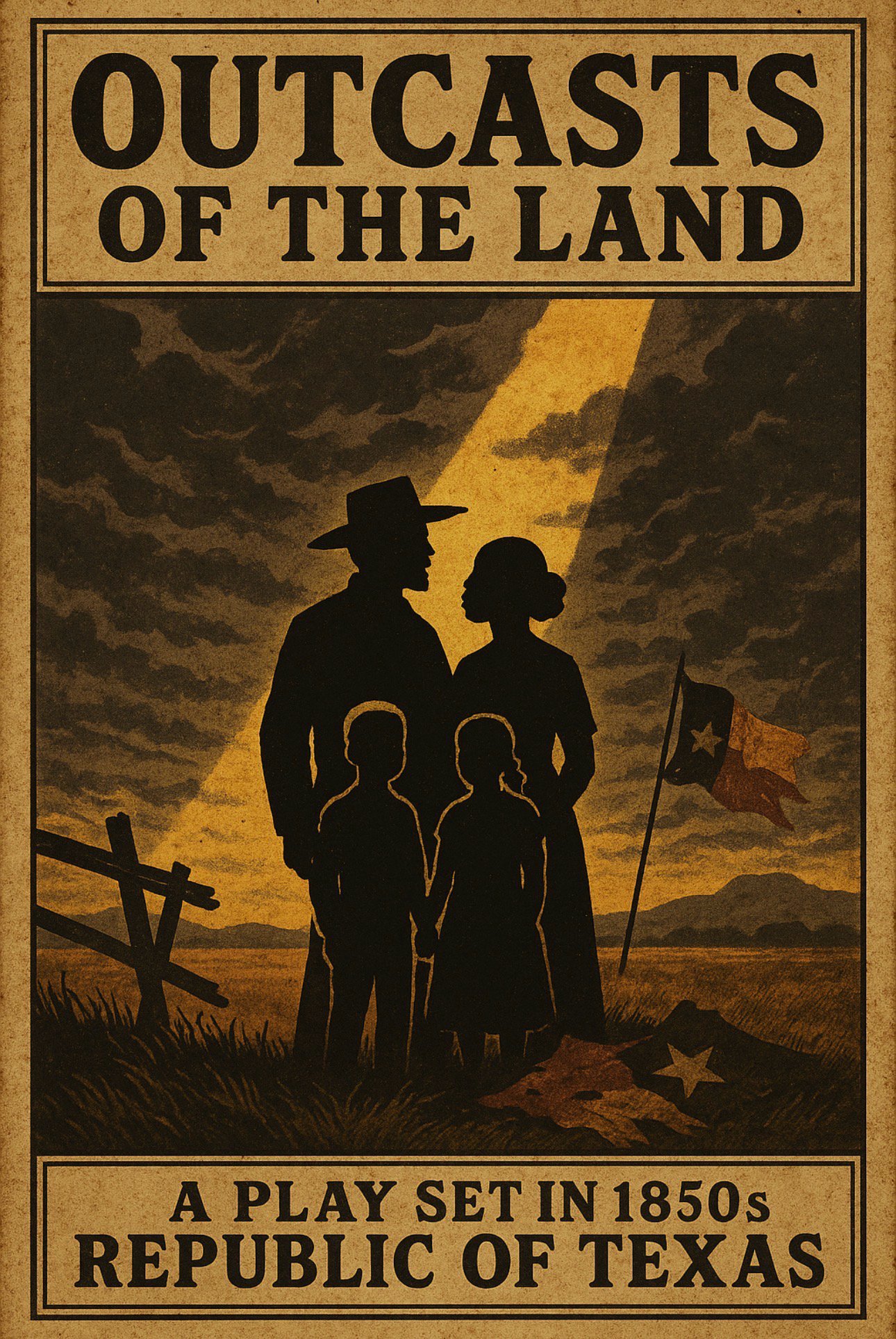
OUTCASTS OF THE LAND
A Stage Play Inspired by the Life of John Ferdinand Webber and Silvia Hector Webber
Form: One-act play
Style: Documentary theatre / memory play
Setting: Present-day archive; frontier Texas; the river; Mexico
Cast: 5–9 actors (roles may be doubled)
--- Characters
- THE DESCENDANT — narrator and present-day witness
- NOAH SMITHWICK — memoirist; voice of the archive
- JOHN FERDINAND WEBBER — physician, father, builder
- SILVIA HECTOR WEBBER — free woman of color; healer, anchor
- THE ENGLISH TUTOR — outsider, educator
- NEIGHBORS / TOWNSPEOPLE — chorus of public opinion
- CHILDREN — implied, voiced, or doubled
---
Prologue — The Book Opens
Lights up on a bare stage. An archive table: lamp, chair, an old book.
THE DESCENDANT
When I first opened Noah Smithwick’s The Evolution of a State—
one hundred and twenty years after it was published—
I did not expect to find my own family inside its yellowing pages.
I grew up with fragments.
A Vermont doctor.
A free woman of color.
A ferry crossing.
A whisper that some crossings were not only for travelers.
But in school, their names were not there.
In museums, their faces were absent.
And then—one day—
I found them in the words of a white neighbor
who could not quite decide whether to admire or condemn them.
NOAH SMITHWICK appears, half-lit.
SMITHWICK
I wrote what I saw.
I wrote what I remembered.
THE DESCENDANT
Your memoir was written in 1899—
nearly half a century after you last saw them.
You called her by a nickname that was not her own.
You called their marriage a “low amour.”
Yet you preserved a truth no official record kept:
they lived openly as family
and crossed into Mexico to keep their children free.
She opens the book. Wind.
---
### Scene One — The Name in the Margins
THE DESCENDANT
When I turned the page and saw it—*Webber*—
my breath caught.
SMITHWICK
“Webber took his family home and acknowledged them before the world.
There were others I wot of that were not so brave.”
THE DESCENDANT
You did not call her by her true name.
You called her “Puss.”
Silvia steps into light.
Silvia Hector.
My ancestor.
My grandmother’s grandmother’s grandmother.
SILVIA
Say my name.
THE DESCENDANT
Silvia.
---
Scene Two — Entangled in Love
SMITHWICK
Webber became “entangled in a low amour.”
THE DESCENDANT
Entangled.
Low.
Amour.
What you meant was this:
John Ferdinand Webber fell in love with Silvia Hector—
a woman born enslaved,
whose children would be counted as property
unless someone risked everything to change their fate.
JOHN
I will not leave our child in anyone’s ledger.
SILVIA
I was already free in myself.
THE DESCENDANT
That moment—
unwritten in official records—
was the hinge of our family’s history.
---
Scene Three — Between Two Worlds
Neighbors whisper. Silvia moves among them, helping.
SMITHWICK
“There wasn’t a white woman in the vicinity but knew and liked—”
He cannot say her name.
THE DESCENDANT
Even in praise, you erased her.
SILVIA
You will take my hands when you need them.
You will refuse my seat when I am done.
That is your custom—not my worth.
ALL (soft chorus)
Silvia.
---
Scene Four — Seeds of Envy
A ferry rope. Children cross.
THE DESCENDANT
They prospered despite exclusion.
They built a ferry.
They raised children unhidden.
And for this, they were envied.
NEIGHBOR
Education for them?
SMITHWICK
“The cruel injustice of the thing angered me…
I honored the man for standing by his children—whatever their complexion.”
JOHN
They can burn books.
They cannot burn what our children already know.
---
### Scene Five — The Last Meeting
A mesquite tree.
SMITHWICK
There’s freedom in Mexico.
No one cares about color there.
JOHN
I’ve been thinking the same.
Not just for me.
For them.
THE DESCENDANT
It was the moment exile became inevitable.
---
Scene Six — Across the River
The river moves.
SMITHWICK
“He took my advice, and I never afterward saw or heard of him.”
THE DESCENDANT
That is where the memoir closes the door.
But family memory holds it open.
They crossed the Rio Grande.
They planted again.
They lived not as fugitives—
but as themselves.
SILVIA
I will not carry fear across this river.
---
Scene Seven — What Remains
Back to the archive.
THE DESCENDANT
The gift—
their names survived at all.
The failure—
their dignity was dimmed by prejudice.
This play restores the balance.
SILVIA
Our children lived beyond your words.
THE DESCENDANT
They were outcasts of the land—
but never outcasts of love.
And it is love that carried their story
across rivers,
across centuries,
into my hands—
and now into yours.
River sound. Blackout.
---
END OF PLAY
-
Title & How to Perform
OUTCASTS OF THE LAND
A Reader’s Theatre Adaptation
Length: 15–20 minutes
Readers: 4–6
Style: Seated or standing; scripts in hand; minimal movement
Suggested Roles:
- READER 1 — THE DESCENDANT (Narrator)
- READER 2 — NOAH SMITHWICK
- READER 3 — SILVIA HECTOR WEBBER
- READER 4 — JOHN FERDINAND WEBBER
- READER 5 — NEIGHBORS (Chorus)(optional)
---
Opening — The Book
READER 1 (DESCENDANT)
When I first opened Noah Smithwick’s The Evolution of a State—
one hundred and twenty years after it was published—
I did not expect to find my own family inside its pages.
I grew up with fragments.
A Vermont doctor.
A free woman of color.
A ferry crossing.
A whisper that some crossings were not only for travelers.
But in school, their names were not there.
In museums, their faces were absent.
READER 2 (SMITHWICK)
I wrote what I saw.
I wrote what I remembered.
READER 1
Your memoir was written decades after the fact.
You called her by a nickname that was not her own.
You called their marriage a “low amour.”
Yet you preserved a truth no official record kept:
they lived openly as family
and crossed into Mexico to keep their children free.
---
Scene One — The Name
READER 1
When I turned the page and saw it—*Webber*—
my breath caught.
READER 2
“Webber took his family home and acknowledged them before the world.
There were others I wot of that were not so brave.”
READER 1
You did not call her by her true name.
READER 3 (SILVIA)
Say my name.
READER 1
Silvia Hector.
READER 5 (NEIGHBORS, softly)
Silvia.
---
Scene Two — Entangled in Love
READER 2
Webber became “entangled in a low amour.”
READER 1
Entangled.
Low.
Amour.
What that meant was this:
John Ferdinand Webber fell in love with Silvia Hector—
a woman born enslaved,
whose children would be counted as property
unless someone risked everything to change their fate.
READER 4 (JOHN)
I will not leave our child in anyone’s ledger.
READER 3
I was already free in myself.
But the paper mattered—for them.
READER 1
That moment—
unwritten in official records—
was the hinge of our family’s history.
---
Scene Three — Between Two Worlds
READER 2
“There wasn’t a white woman in the vicinity but knew and liked—”
(He stops.)
READER 1
Even in praise, you erased her.
READER 3
You will take my hands when you need them.
You will refuse my seat when I am done.
That is your custom—not my worth.
READER 5 (NEIGHBORS)
(helper… outsider… not equal…)
READER 1
But I whisper it back into the record now.
ALL
Silvia.
---
Scene Four — Seeds of Envy
READER 1
They prospered despite exclusion.
They built a ferry.
They raised children unhidden.
And for this, they were envied.
READER 5 (NEIGHBORS)
Education for them?
READER 2
“The cruel injustice of the thing angered me…
I honored the man for standing by his children—whatever their complexion.”
READER 4
They can burn books.
They cannot burn what our children already know.
---
Scene Five — The Choice
READER 2
There’s freedom in Mexico.
No one cares about color there.
READER 4
I’ve been thinking the same.
Not just for me.
For them.
READER 1
It was the moment exile became inevitable.
---
Scene Six — Across the River
READER 2
“He took my advice, and I never afterward saw or heard of him.”
READER 1
That is where the memoir closes the door.
But family memory holds it open.
They crossed the river.
They planted again.
They lived not as fugitives—
but as themselves.
READER 3
I will not carry fear across this river.
---
Closing — What Remains
READER 1
The gift—
their names survived at all.
The failure—
their dignity was dimmed by prejudice.
This story restores the balance.
READER 3
Our children lived beyond those words.
READER 4
They lived free.
READER 1
They were outcasts of the land—
but never outcasts of love.
And it is love that carried their story
across rivers,
across centuries,
into our hands.
---
End
END OF READER’S THEATRE
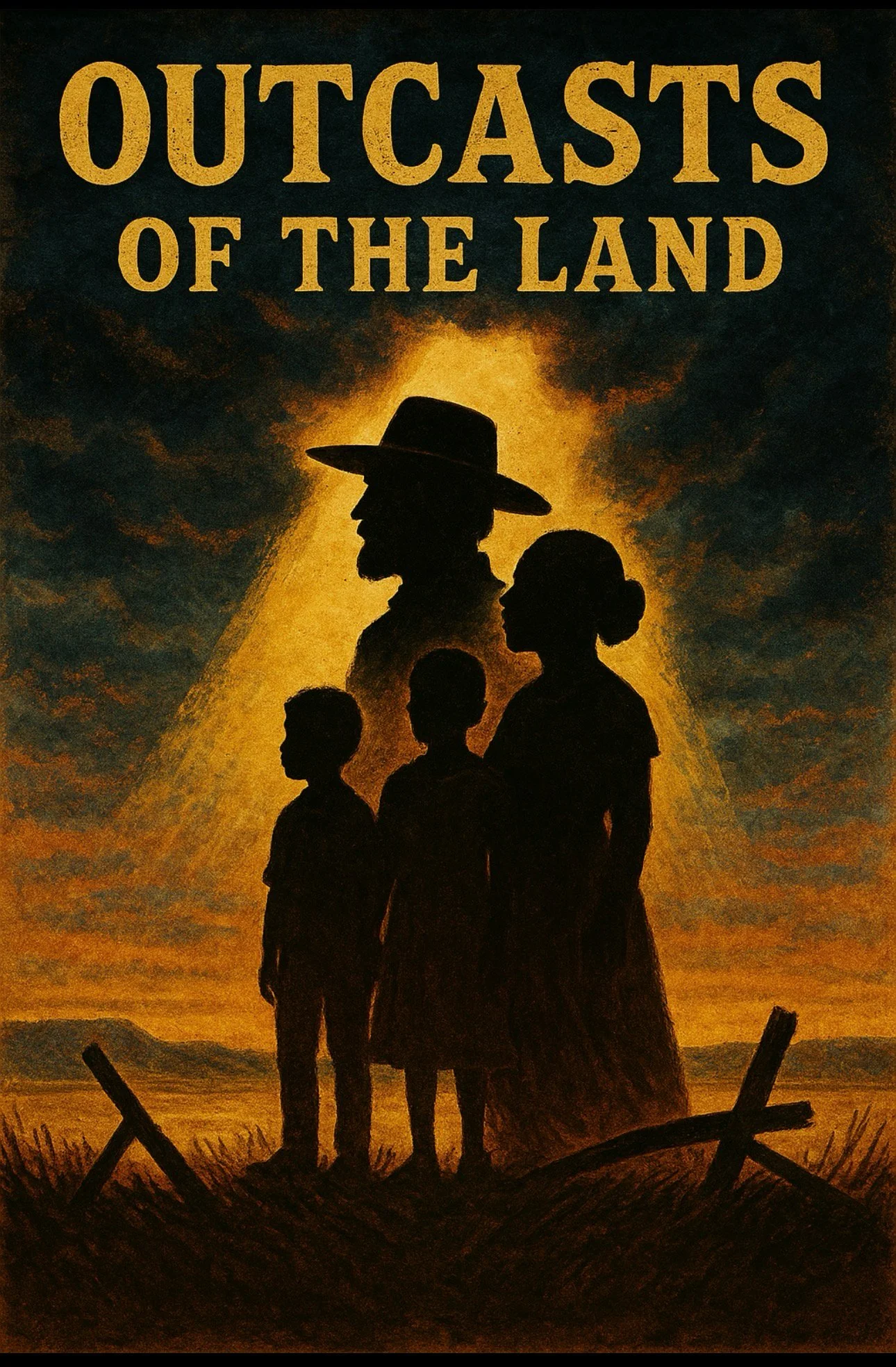
OUTCASTS OF THE LAND
A Multi-Part Historical Series
A film and visual narrative adaptation exploring the historical lives of John Ferdinand Webber and Silvia Hector Webber.
Historical Arts · Film & Visual Narrative
Providing online non-downloadable film and visual storytelling content for educational and cultural purposes, grounded in documented history and descendant memory.
-
Some stories survive in monuments.
Others survive in margins.
More than a century after Noah Smithwick published The Evolution of a State, a descendant opens its pages—and finds her own family described in language that both preserves and diminishes them.
He called their love “entangled.”
He called their marriage “low.”
He called Silvia by a name that was not her own.
But between his lines lives something undeniable:
A Vermont physician who defied racial codes.
A free woman of color who carried dignity the law tried to deny.
A family who built a ferry, raised children openly, endured exile, and crossed the Rio Grande so their sons and daughters would never be counted as property again.
Outcasts of the Land is not simply a frontier story.
It is a reckoning.
Through archival narration, dramatic reenactment, and descendant reflection, this multi-part series reclaims a family’s legacy from the margins of a 19th-century memoir—and restores their names to history.
They were called outcasts.
But they were never without courage.
And they were never without love.