

LOVE & RESISTANCE
Across Changing Law, Shifting Borderlands
The Chronological Journey of Silvia Hector Webber & John Ferdinand Webber
Diplomatic Edition · Fully Footnoted
I. FOUNDATIONS
1786–1821
II. MEXICAN TEXAS
1822–1832
III. FAMILY FORMATION
1833–1837
IV. DANGER & EXILE
1837–1860
V. CIVIL WAR
1861–1865
VI. LEGACY
1866–1899
VII. MODERN RECOGNITION
2021–Ongoing
Alternate Birth Year — John Ferdinand Webber
Alternate record places the birth of John Ferdinand Webber in Danville, Vermont, into a New England family of British descent.1
Marriage of John Webber and Hannah Morrill
John Webber (father) and Hannah Morrill marry in Danville, Caledonia County, Vermont.2
Anchor Birth Year — John Ferdinand Webber
Competing and widely cited birth year for John Ferdinand Webber appears in later census and family reconstructions; 1794–1795 serves as anchor, with 1786 preserved as alternate.3
John Ferdinand Webber Born
Born in Danville, Vermont, to Hannah Morrill and John Webber.4
Silvia Hector Born into Slavery
Born in Spanish West Florida, a region shaped by shifting imperial borders.5
Cryer Family Migration
The extended Cryer family (who will later own Silvia) migrates from Georgia to St. Helena Parish in Spanish West Florida, then to Arkansas and Missouri Territory.6
Mexico’s War of Independence Begins
Introduces antislavery ideology into national discourse.7
John Ferdinand Webber Serves in War of 1812
Serves as a Private in the 31st U.S. Infantry under Captain S. Dickinson during the War of 1812. His service later underpins his pension and veteran status; any frontier healing knowledge later attributed to him was informal and experience-based, never that of a trained physician.8
Silvia Separated from Her Mother
As a young child, Silvia is separated from her mother, Sarah — a separation documented in the 1816 probate record that inventories them apart.9
Probate Inventory — Mother and Child Listed Separately
Inventory of the estate of Dr. Samuel Flowers in East Baton Rouge Parish (Document #77) lists Sarah ($600) and Silvia (“Sylvia,” $350) separately, documenting the forced separation of mother and child. Sarah is Silvia’s documented mother.10
Silvia Sold to Morgan Cryer Sr.
Silvia (“Silva”), sold by Silas McDaniel to Morgan Cryer Sr. for $550, recorded July 3, 1819, in Clark County, Arkansas (Deed Book A, pp. 24–25). The deed body names “Clark County, Missouri Territory” — the region became Arkansas Territory the very next day.11
Adams–Onís Treaty
Establishes the U.S.–Spanish Texas border; slavery remains legal on both sides of the line.12
John Ferdinand Webber Migrates Southwest
Migrates through frontier corridors toward the borderlands that will become central to his and Silvia’s lives.13
Mexican Independence
Mexico gains independence after an 11-year war; Texas becomes part of the new nation. Mexico formally adopts antislavery principles.14
Jared Groce Brings Enslaved People to Texas
Jared Groce brings 90 enslaved people into Austin’s Colony, embedding plantation slavery in the region.15
John Ferdinand Webber Arrives in Mexican Texas
Arrives in Mexico, settling in San Felipe de Austin within Stephen F. Austin’s colony, seeking to establish himself as a settler.16
Imperial Colonization Law
Mexico enacts the Imperial Colonization Law, permitting slavery in practice via long-term “indenture” contracts (a legal fiction masking coerced labor).17
Mexican Federal Constitution
The constitution is silent on slavery, leaving regulation to states; Coahuila y Tejas tolerates slavery in practice.18
Census of Austin’s Colony
Census records 443 enslaved people.19
John Cryer Appears in Austin’s Register
John Cryer appears with five enslaved people listed, including Silvia. He petitions for a Mexican land grant as part of Austin’s Colony.20
John Webber Settles Near Colorado River
John Ferdinand Webber appears in Austin’s Colony records and settles near the Colorado River. He is a neighbor and business partner of John Cryer.21
Silvia Brought to Mexican Texas
Silvia is brought into Mexican Texas by John Cryer, placing her in proximity to John Webber.22
Coahuila y Tejas Restricts Slavery
Bans further importation of enslaved people and provides that children born to enslaved women be freed at adulthood. Anglo settlers evade enforcement by reclassifying enslaved people as “indentured servants.”23
Indenture Loophole Dominates
Indenture/servitude contracts become the dominant loophole preserving slavery despite Mexican law. Foreign indenture contracts are legalized in May and widely misused.24
Guerrero Abolition Decree
President Vicente Guerrero issues a nationwide abolition decree. Texas receives an exemption after Anglo settler pressure, but the decree strengthens the legal basis for abolition throughout Mexico.25
First Child Born — Elsie “Clemencia” Webber
Silvia gives birth to Elsie (also recorded as Alcy, Alecy, or Clemencia) Webber, their first child, legally treated as enslaved under Texas practice despite Mexico’s antislavery posture.26
Law of April 6
Restricts U.S. immigration into Texas, enforces customs duties, attempts to curtail slavery’s expansion, and prohibits further importation of enslaved people.27
Land Grant Received
John Ferdinand Webber receives a headright land grant of 2,214.2 acres on the Colorado River near what is today the Travis–Bastrop county line.29
Anglo-Texan Resistance Erupts
Anglo-Texan settlers resist Mexican authority; skirmishes erupt as settlers demand restoration of federalism and claim Mexico threatens their “rights.”30
Sons Henry and John Jr. Born
Silvia gives birth to sons Henry and John Jr., both legally enslaved under the doctrine that a child’s status follows that of the mother.31
Family Formed While Silvia Enslaved
John and Silvia form a family while Silvia remains legally enslaved in the Cryer household.32
Webber’s Fort Established
John establishes Webber’s Fort and a stockade on a hill, becoming the first non-native person to live on Webber’s Prairie in Travis County, Texas.33
Family Life Under Mexican Law
Silvia and John continue their family life under the protection of Mexican law, which recognizes their family’s rights.34
Santa Anna Centralizes Power
President Santa Anna centralizes power, dissolving federalist protections and destabilizing prior legal guarantees that sheltered free Black and interracial families under Mexican governance.35
Emancipation Bond Filed
After years of negotiations, John Ferdinand Webber reaches an agreement with John Cryer to emancipate Silvia and their children. An emancipation bond is filed at San Felipe before Alcalde R. M. Williamson. Under Mexican law, Silvia and the children are formally emancipated. The bond’s terms were never fulfilled; the land John had pledged was ultimately forfeited to Cryer.36
Silvia and John Webber Marry
After her freedom was finalized, Silvia and John F. Webber lived as husband and wife. Descendant oral histories state they were wed by a Catholic priest, Father Michael Muldoon. Interracial marriage was legal under Mexican law, though Texas frowned upon it. They had eleven documented children.28
Santa Anna Deploys Troops to Texas
Santa Anna deploys troops to Texas to enforce centralist rule.38
Battle of Gonzales — Texas Revolution Begins
The Texas Revolution begins.39
Slavery’s Protection as Revolutionary Motive
Slaveholding settlers fight to separate from Mexico; modern scholarship emphasizes slavery’s protection as a central motive.40
Texas Independence — Family Status Voided
Texas declares independence. The Republic of Texas Constitution explicitly legalizes and protects slavery, bans free Black immigration, prohibits interracial marriage, and restricts manumission. John and Silvia’s lawful Mexican family status is voided.41
Mexico Reaffirms Abolition
Mexico reaffirms abolition and continues to treat anyone reaching Mexican soil as free.42
Life at Webber’s Prairie
The Webbers live at Webber’s Prairie east of Austin, raising a biracial family under increasing racial surveillance and growing hostility.43
Webber’s Prairie Officially Named
The settlement becomes officially known as Webber’s Prairie (later Webberville), a community of free Black and mixed-race families anchored around the Webber ferry.44
Private Tutor for Webber Children
The Webbers hire Robert G. McAdoo, a school teacher from North Carolina, to live with them and teach their children, who are not allowed to attend local schools due to racial prejudice.45
Slavery Expands, Resistance Networks Grow
Slavery expands and race laws harden; early resistance networks begin guiding freedom seekers south toward Mexico.46
Eleven Documented Children
John and Silvia Webber raise eleven documented children: Elsie “Clemencia,” Henry, John, Leonard, Sarah Jane, James “Santiago,” Wilson, Andrew, Sabrina, Rachel Amanda, and Marcelino Jeremiah. Some secondary sources cite thirteen; that figure is an inflation created by a doubled name and a name-variation split, not additional children. Eleven is the documented roster.47
Freedom Seekers Flee to Mexico
Dozens to hundreds of enslaved people flee from Texas into Mexico. Mexico repeatedly refuses U.S. and Texas extradition demands, upholding its abolitionist position.48
Prejudice Against Mixed-Race Family
Newcomers from the Deep South resent Webber’s racially mixed marriage. The family faces cruel prejudice and unfair treatment; new settlers in Webberville want to be rid of the founder and his mixed-race family.49
Texas Annexation
Texas is annexed by the United States as a slave state; legal threats intensify for free Black families and interracial households.50
U.S.–Mexico War & Treaty of Guadalupe Hidalgo
The war fixes the international border at the Rio Grande, transforming a fluid frontier into a hard boundary between a slaveholding U.S. South and an antislavery Mexico.51
Texas Enslaved Population: 58,161 — Fugitive Slave Act
Texas enslaved population reaches 58,161. The Fugitive Slave Act heightens kidnapping risks for free Black families. The Webbers appear in the 1850 Travis County census at Webber’s Prairie.52
Land Forfeited to Settle the Freedom Debt
The Webbers forfeit a large portion of their Webberville property to settle the debt owed to John Cryer under the emancipation bond — the pledged land lost when the bond’s terms went unmet.53
U.S. Demands Return of Fugitives — Mexico Refuses
The United States and Texas repeatedly demand the return of fugitives from Mexico; Mexican officials refuse each demand.54
Webbers Sell Central Texas Land
The Webbers sell their land in Central Texas and move south, seeking to escape racial discrimination, strong prejudice against free Blacks, and increased attacks on the family.55
Seminole Maroons Granted Land in Mexico
Seminole Maroons and Black fugitives are granted land in northern Mexico, further solidifying the borderlands as a Black freedom zone.56
Permanent Relocation to Rio Grande Valley
The Webbers permanently relocate to the Rio Grande Valley, purchasing land on both sides of the river.57
Land Acquired in Hidalgo County
John Ferdinand Webber acquires a two-fifths interest (two square sitios de ganado mayor) in the El Agostadero de la Gata (El Gato) grant for $800, from the heirs of Juan Treviño (late of Matamoros): his widow María Cecilia Domínguez and children María Concepción, María Rafaela, and María Refugia Treviño. The grant, originally confirmed to Juan Treviño, is bounded south by the Rio Grande and east by La Blanca. Signed June 8, recorded June 13, 1853, before Clerk T. Rhodes at Edinburg. This marks the earliest documented presence of the Webber family in the Rio Grande Valley.58
Webber’s Ranch and Cemetery Founded
The Webbers establish Webber’s Ranch along the Rio Grande, six miles east of Hidalgo near the present-day Donna water pump, building a home on the banks of the river across from Reynosa, Mexico. The Webber Ranch cemetery is founded this year.59
Ferry Landing Built and Licensed
The Webbers build a ferry landing and obtain a ferry license to transport goods and people across the river.60
Escapes Across the Rio Grande Intensify
Escapes across the Rio Grande intensify; accounts later documented in Texas newspapers (especially around 1863) describe crossings hidden in bales of cotton.61
Association with Jackson Family
The Webbers become associated with neighboring interracial couple Matilda and Nathaniel Jackson, who also operate a safe house for fugitives on the Underground Railroad to Mexico.62
Texas Enslaved Population: 182,566
Texas’s enslaved population reaches 182,566 (over 30%). The Rio Grande is widely recognized as a route to freedom.63
Texas Secedes — Ranch Becomes Refuge
Texas secedes and joins the Confederacy. The Webbers oppose secession, remaining loyal to the Union. Confederate troops take control of the Rio Grande Valley.64
Webber Ranch as Sanctuary
The Webber Ranch becomes a sanctuary for Unionists, fugitives from slavery, and other refugees. Silvia, in her 50s, is remembered as a protector who feeds, shelters, and guides freedom seekers crossing into Mexico. According to family lore, Silvia uses her home as a stop on the Underground Railroad leading south, and the Webber ferry helps fugitives cross the Rio Grande to freedom.65
Persecuted as Union Sympathizers
The Webbers are persecuted as Union sympathizers and are driven off their ranch.66
Emancipation Proclamation Issued
The Emancipation Proclamation is issued but has no immediate effect in Texas.67
Crossings Hidden in Cotton Bales
Contemporary reports and later newspaper accounts describe enslaved escapees crossing the Rio Grande hidden in cotton bales and moving via ferries and informal corridors.68
Confederate Arrest of Webber’s Sons
Confederate forces under John S. “Rip” Ford and Santos Benavides drive federal forces back toward Brownsville. At the Webber Ranch, Confederate troops arrest Webber’s sons as Union sympathizers. One son escapes, rides to Brownsville, and informs the federal commander that Ford has only about sixty men. Union troops are dispatched, but Ford strikes first, scattering the force.69
Exile to Mexico
Under pressure from Confederate occupation, the Webber family takes refuge in Mexico. Several Webber children are born in Mexico during this exile. The 1880 census later records J. Morrill Webber as born in Mexico, corroborating wartime exile.70
Confederate Surrender
Confederate surrender ends major Civil War operations.71
Webbers Return to Texas
The Webbers return to Texas after the collapse of the Confederacy, reestablishing their presence near the Rio Grande.72
Juneteenth — Emancipation in Texas
General Order No. 3 declares all enslaved people in Texas free.73
Freedmen’s Bureau Begins Operations
The Freedmen’s Bureau begins operations in Texas.74
Texas Black Codes Enacted
Texas enacts Black Codes restricting the freedoms of formerly enslaved people; racial violence escalates.75
Reconstruction Acts — Military Reconstruction
Reconstruction Acts place Texas under military Reconstruction (Fifth Military District).76
John Webber Listed as Unionist Voter
Hidalgo County voter rolls list John Ferdinand Webber as a Unionist voter, reflecting formal participation in postwar civic life.77
Ku Klux Klan Violence Increases
Ku Klux Klan activity and broader white supremacist violence increases across Texas.78
Texas Readmitted — Census Lists Webbers in Hidalgo County
Texas is readmitted to the Union. The U.S. census lists the Webbers in Hidalgo County near “Edinburk” (Edinburg), among Black and mixed-race families, indicating a multiracial border community.79
Matthew Gaines Elected to Texas Senate
Matthew Gaines is elected to the Texas Senate and advocates public education and civil rights reforms.80
War of 1812 Pension Processed
John Ferdinand Webber’s War of 1812 pension is processed (late), becoming a modest but important support, especially for Silvia in later years.81
“Redemption” — White Supremacists Regain Control
“Redemption”: white supremacist Democrats regain political control through violence and intimidation, purging Black political gains.82
John Webber Deeds Land to Daughter Rachel
John F. Webber conveys land — part of the El Gato / Rachael Webber tract — to his daughter Rachel Webber, recorded Book C, pp. 197–199, Hidalgo County. A father placing land in a daughter’s own name.82a
Compromise of 1877 — Jim Crow Era Begins
The Compromise of 1877 ends Reconstruction and ushers in the Jim Crow era.83
Silvia Recognized as “Wife” in Federal Census
Silvia appears in federal records as “wife,” a recognition denied for decades. J. Morrill Webber is listed as born in Mexico, corroborating exile.84
It took roughly forty years and a flight into exile before the census finally called her what she was: wife.
John Ferdinand Webber Dies
John Ferdinand Webber dies at his home near what is now Donna, Texas, close to the Rio Grande. He is buried in the Webber family cemetery in Hidalgo County, near the levee road above the Donna pump.85
Silvia Hector Webber Dies
Silvia Hector Webber dies in Hidalgo County, remembered as a free woman, matriarch, and central figure in the Rio Grande freedom corridor. Her grave is believed to be on the Webber Ranch in the family cemetery and remains unmarked alongside other family members.86
Rachael Webber Tract Partitioned Among Heirs
The Rachael Webber tract (606 acres, El Gato Grant) is partitioned among Rachael’s heirs into five shares — Leonard Jackson, Severa Webber Singletery, Juanita Webber Biddy (Share No. 3), James M. Webber, and others — the family land passing into the next generation, held and divided in their own names.86a
The Evolution of a State Published
The Evolution of a State, or, Recollections of Old Texas Days by Noah Smithwick is published, including several pages on John Ferdinand Webber and Silvia Hector Webber — a valuable but biased contemporary account, reflecting the racial attitudes and decades-later memory of a white frontiersman.87
Silvia’s Freedom Papers at Briscoe Center
Silvia Hector Webber’s freedom papers (emancipation bond and related records) are held at the Dolph Briscoe Center for American History at the University of Texas at Austin. They have been exhibited publicly and are available for research.
Plano African American Museum Exhibits Begin
The Plano African American Museum begins developing exhibits focused on the Underground Railroad to Mexico, featuring the Webber family legacy.88
Podcast “Hungry for History” Features Silvia Webber
The podcast “Hungry for History with Eva Longoria and Maite Gómez-Rejón” features an episode on “Freedom Fighters in Mexico and Texas” highlighting Silvia Webber as the “Harriet Tubman of Texas,” with guests including Dr. María Hammack and representatives of the Webber Family.89
“Risking It All For Freedom” Exhibit
The Plano African American Museum presents “Risking It All For Freedom,” an exhibit co-curated by Webber family descendants, displaying photos and documents tracing the journeys of those who escaped slavery via the southern route to Mexico.90
A Descendant Builds an Archive
A descendant of John Ferdinand Webber creates a website to share narratives drawn from family oral histories. Family historians and the Webber family plan to reunite in Webberville, Texas, in 2028 while continuing to research and document the Webber story. The University of Texas Rio Grande Valley Special Collections & Archives maintains a research guide for primary and secondary sources on the Webber family.91
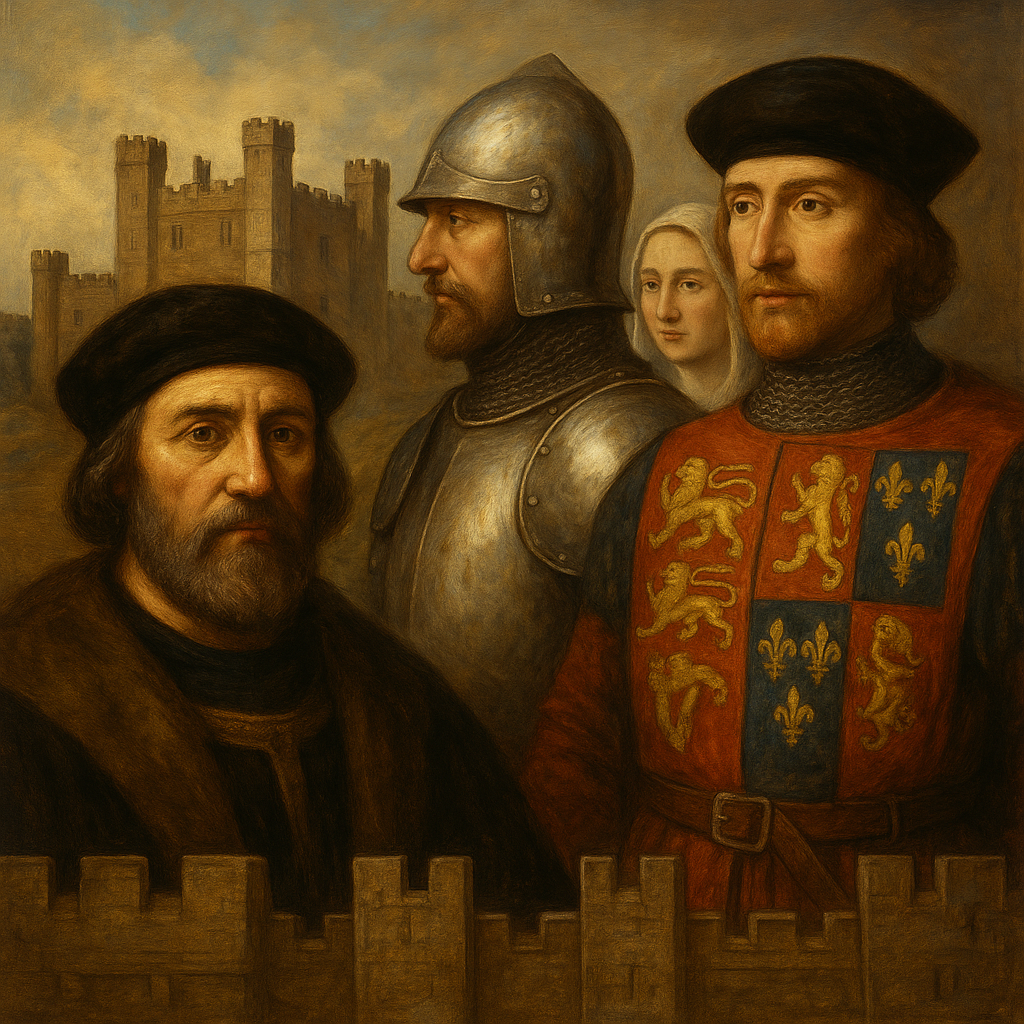
🜂 VISUAL LEGACY: 700 YEARS IN MOTION
A timeline of remembered lineage, verified records, family reconstruction, migration, freedom, exile, and return.
England, Memory, and Reconstructed Lineage
- c. 1325 — Medieval English lineage memory begins in northern England, preserved through reconstructed family tradition.
- 1385 — According to family tradition, Maud Percy marries John Neville of Raby, linking the remembered Percy–Neville lineage.
- 1464 — Sir Ralph Percy dies at Hedgeley Moor; later chroniclers associate him with the phrase, "I have saved the bird in my bosom."
- 1598 — Thomas Webster of Great Leighs, Essex, appears in parish tradition connected with "soundness in doctrine."
- 1640s — English Civil War-era oath refusals and dissent traditions become part of the reconstructed moral lineage.
New England, Oaths, Labor, and Healing
- c. 1630 — John Kittredge is born in London; later associated with the New England medical line.
- 1654 — Thomas Webber takes the Oath of Fidelity to Plymouth authority near the Kennebec River.
- 1660 — John Kittredge appears in Billerica, Massachusetts town records.
- 1687 — Mary Parker Webber petitions Governor Edmund Andros regarding land she possessed and improved.
- 1689 — Dr. John Kittredge marries Hannah French, joining medical, literacy, and civic-service lines.
- 1690 — John Bailey dies returning from the Canada Expedition.
- 1692 — Mary Webber and her son Samuel appear in surviving Salem Witchcraft Papers as witnesses.
- 1730–1815 — Mary Ann Rolfe Bailey lives across the colonial and early national periods.
- 1755–1834 — Hannah Bailey Kittredge carries the Bailey–Rolfe–Kittredge inheritance forward.
Vermont, Mexican Texas, Freedom, and Exile
- 1795 — John Ferdinand Webber is born in Vermont.
- 1820s — John Ferdinand Webber migrates to Mexican Texas.
- 1827 — Webber's land and settlement presence emerge along the Colorado River.
- June 11, 1834 — Silvia Hector's emancipation bond is sworn before Alcalde R. M. Williamson. John F. Webber stands as debtor; John Cryer stands as emancipator.
- 1830s–1840s — John and Silvia establish Webber's Prairie, later known as Webberville.
- 1840s–1861 — Webber's Prairie and the Colorado River ferry become associated through descendant memory and regional recollection with aid to freedom seekers.
- 1861 — Texas enters the Confederacy; the Webber family faces increased danger.
- Civil War Era — John and Silvia flee southward toward the Rio Grande.
Survival, Silence, Recovery, and Return
- 1865 — The Civil War ends; the Webber family rebuilds in the Rio Grande borderlands.
- 1870s–1880s — Census records preserve the family under variant spellings: Weber, Webb, Wibber.
- 1880–1965 — The story survives in fragments: oral memory, family recollection, scattered documents.
- 1966 — The Fernsten Pedigree Chart helps reconnect family lineage across generations.
- 2000s–2020s — Digitized archives and descendant research make fuller reconstruction possible.
- 2023 — The Hector-Webber Family start a descendants archive to preserves the lineage through continues work and research.
⚡ THE TRANSFORMATION OF INHERITANCE
Obedience & Allegiance
Castle & Crown
Oaths & Dissent
Healing & Labor
Freedom & Exile
Moral Borders Crossed
Silence → Recovery → Return
The Archive Remembers
Percy · Neville
Webber · Kittredge
Silvia · John
The Record Changes Hands