

The Stories · Rio Grande
A Chronicle of Law and Love
The Webber Family's Defiance
IIntroduction
They built a life that defied—daily, quietly, and at cost.
Not in heroic moments you'd carve into monuments, but in the thousand small decisions history rarely records. John Ferdinand Webber and Silvia Hector carved existence from the volatile ground where laws shifted and hatred simmered, where flags changed but danger remained.
This is not a romance. It is harder than that.
It is the story of a family whose births, movements, marriages, and survival were governed by which nation claimed the land that year—and who that nation decided counted as human.
They did not move through history freely.
History moved through them.
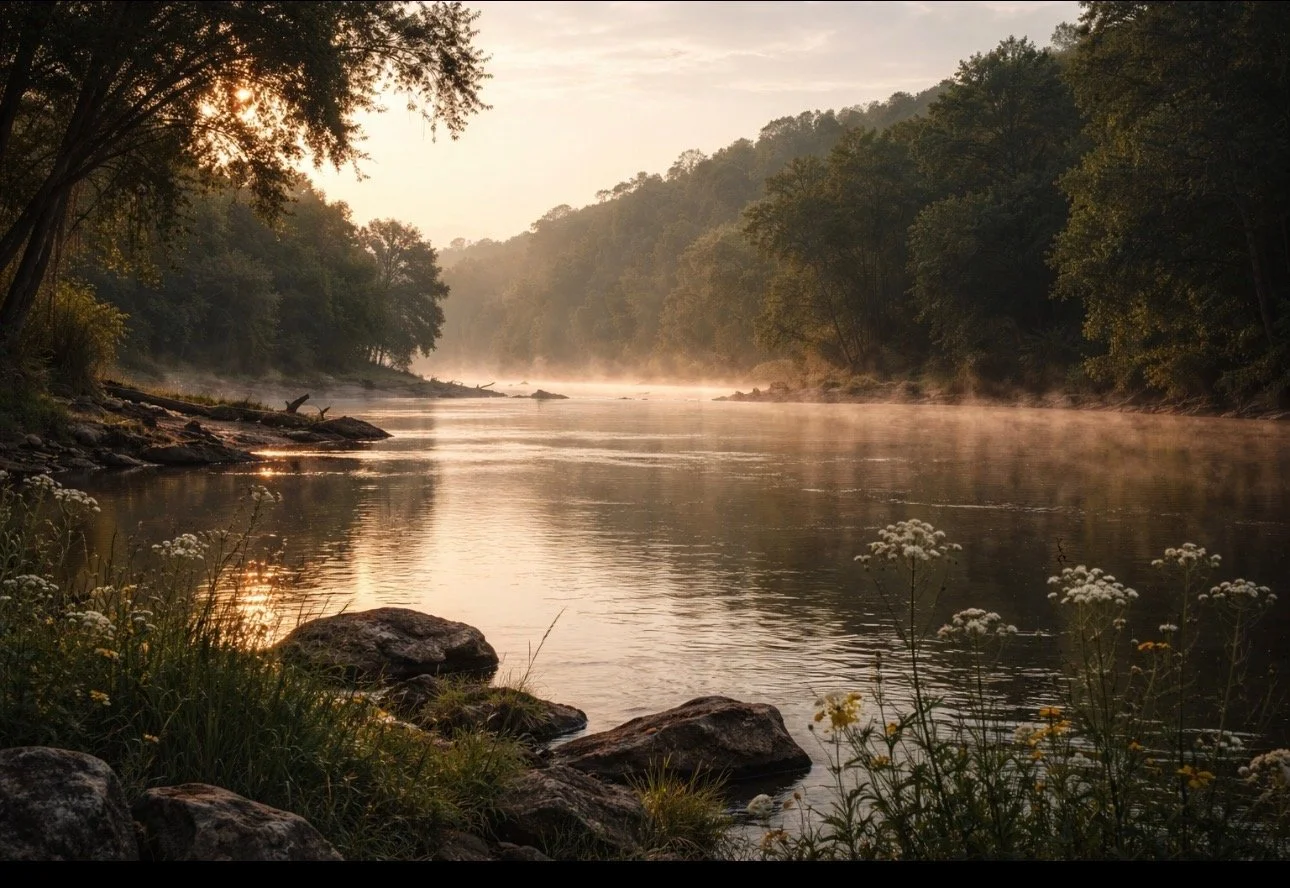
Three rivers carried their story. Not symbolically—physically. Each river marked a change in law, in threat, in possibility.
The Mississippi, where Silvia was taken from her mother and first learned how the law could make violence look orderly.
The Colorado, where freedom was purchased at unbearable cost and defended against a rising tide of hostility.
The Rio Grande, where exile became strategy and liberation became communal work.
Between those rivers lies silence.
And inside that silence, everything we almost lost.
IIMississippi Waters 1794–1826
The Taking
John Ferdinand Webber was born in Vermont in 1794—though some records suggest 1786. As a young man, he served in the War of 1812, part of a nation still arguing with itself over sovereignty and belonging.
Silvia's beginning entered the record differently.
Born in 1807 in Spanish West Florida, she appears in history not through a birth certificate, but through property law.
In 1816, at approximately nine years old, she was listed in the probate inventory of Dr. Samuel Flower in East Baton Rouge Parish.
Her mother, Sarah: valued at $600.
Silvia: valued at $350.
Inventoried separately.
Three words in a ledger.
No record of her crying. No notation of resistance. No acknowledgment that a child and mother were being torn apart.
This is how law moves when it wants to move efficiently—by spacing harm into columns.
In 1819, the border between U.S. territory and Spanish Texas was fixed. Slavery remained protected on both sides. That same year, twelve-year-old Silvia was sold again.
Her price increased. Not because she mattered more—but because she could be used more.
I keep returning to those numbers. How easily they move across a page. How rarely we stop to imagine what each one meant.
IIIInterlude — What the Ledger Could Not Hold
There is a silence after the inventory.
Years where Silvia exists—but not in ink.
The archive does not tell me where she slept. Whether she memorized river routes. Whether she remembered her mother's voice in detail or allowed it to blur so survival could take its place.
The record preserves her price. It does not preserve her preferences.
Did she like cornbread or biscuits? The archive does not say.
This is where family memory begins—not with facts, but with absence.
Silence is not forgetting. Silence is often the method of survival.
IVColorado Currents 1827–1851
The Cost
Then came the Colorado River.
In Mexican Texas, law shifted again. Slavery was publicly condemned and privately tolerated. Legal language changed faster than daily practice.
Silvia gave birth under those contradictions. Children born into technical abolition and practical bondage.
In 1832, John received a 2,214-acre land grant along the Colorado River. For a moment, land suggested stability.
But emancipation was never simple.
When he sought Silvia's legal freedom in 1834, the initial demand was not monetary.
Two enslaved children. A two-year-old boy. A three-year-old girl. Human lives as payment.
They refused.
I try to imagine the silence after that refusal—the weight of it, the risk of it. Some decisions alter the temperature of a community.
Instead, land was pledged in an emancipation bond. Half his league of land, committed to secure liberty. The Webberville tract would later be forfeited to satisfy that obligation.
Land for lives. They chose lives.
After the Texas Revolution, slavery was written firmly into law, and interracial marriage was outlawed. Their household—already visible—became a provocation.
Their children were barred from school. When they hired a tutor, neighbors threatened violence.
Teaching a child to read became an act of resistance. Not because literacy was radical—but because it unsettled a racial hierarchy others were determined to preserve.
By 1851, the threats had outgrown the ground they stood on. The Texas State Historical Association records it plainly: the family was pushed out of Travis County.
They did not leave because they had failed. They left because they had been seen—and in that place, at that time, to be seen was to be in danger.
So they turned south.
VRio Grande Waters 1853–1892
The Crossing
They did not run south in defeat. They chose the river.
In 1853, they acquired land in Hidalgo County, along the Rio Grande, and licensed a ferry that ran from their own landing to Mexican waters. A documented business. A legal enterprise.
And something more.
Mexico had abolished slavery. Mexico would not return the people who reached it.
For someone held in bondage in Texas, the nearest freedom was not north. It was south—across the water the Webbers now controlled.
I think about what a ferry is. A way across. A way out.
A family that had once had to purchase its own freedom now stood at the edge of someone else's, holding the rope.
The archive is careful here. It says "may have." It says "family lore."
I will say only what I can defend: they lived on the river, they ran the crossing, and Mexico lay on the other side. The rest, the family has always known.
The Reckoning
When the Civil War came, their loyalties made them targets. The Webbers were Unionists in a Confederate state.
Confederate forces under Rip Ford and Santos Benavides came for their sons and arrested them. One escaped and rode to Brownsville to warn the Union troops.
Silvia crossed the river with the younger children.
And then—she came back. She always came back.
On June 19, 1865, General Order No. 3 was read aloud in Texas. Juneteenth. The thing the ledger of 1816 could never have imagined: emancipation, announced as law.
The Webbers returned to their ranch.
By 1870, the census found them landowners—not fugitives, not property. Established.
By 1880, they had become a geography of their own: John and Silvia at the center, and around them three generations, dwellings set in deliberate proximity. Children and grandchildren arranged like an argument the family was making with its own presence.
Family became geography. Geography became sanctuary.
John Ferdinand Webber died in 1882.
His War of 1812 pension—the same federal service that opened this story, in a nation still arguing over who counted—sustained Silvia through her last years.
She outlived him by a decade.
Silvia Hector Webber died in 1892, on the land she had helped claim, in the valley that had taken her family in when their own town drove them out.
VIThe Rivers Remember
Three rivers carried them.
The Mississippi, where a mother and a daughter were separated into columns.
The Colorado, where freedom cost a home—and they paid it.
The Rio Grande, where a ferry became a hand held out across the water.
Between those rivers was silence—the years the archive could not hold.
And inside that silence: a family that refused to disappear.
They did not move through history freely. History moved through them.
And when it had finished moving, they were still here.
We are still here.
— Debra E. Ortega, great-great-great-granddaughter of John Ferdinand and Silvia Hector Webber
Mississippi Waters (1794–1826)
The Taking
John Ferdinand Webber was born in Vermont in 1794—though some records suggest 1786. As a young man, he served in the War of 1812, part of a nation still arguing with itself over sovereignty and belonging.
Silvia's beginning entered the record differently.
Born in 1807 in Spanish West Florida, she appears in history not through a birth certificate, but through property law.
In 1816, at approximately nine years old, she was listed in the probate inventory of Dr. Samuel Flower in East Baton Rouge Parish.
Her mother, Sarah: valued at $600.
Silvia: valued at $350.
Inventoried separately.
Three words in a ledger.
No record of her crying.
No notation of resistance.
No acknowledgment that a child and mother were being torn apart.
This is how law moves when it wants to move efficiently—by spacing harm into columns.
In 1819, the border between U.S. territory and Spanish Texas was fixed. Slavery remained protected on both sides. That same year, twelve-year-old Silvia was sold again.
Her price increased.
Not because she mattered more—but because she could be used more.
I keep returning to those numbers.
How easily they move across a page.
How rarely we stop to imagine what each one meant.
Interlude — What the Ledger Could Not Hold
There is a silence after the inventory.
Years where Silvia exists—but not in ink.
The archive does not tell me where she slept.
Whether she memorized river routes.
Whether she remembered her mother's voice in detail or allowed it to blur so survival could take its place.
The record preserves her price.
It does not preserve her preferences.
Did she like cornbread or biscuits?
The archive does not say.
This is where family memory begins—not with facts, but with absence.
Silence is not forgetting.
Silence is often the method of survival.
Colorado Currents (1827–1851)
The Cost
Then came the Colorado River.
In Mexican Texas, law shifted again. Slavery was publicly condemned and privately tolerated. Legal language changed faster than daily practice.
Silvia gave birth under those contradictions.
Children born into technical abolition and practical bondage.
In 1832, John received a 2,214-acre land grant along the Colorado River. For a moment, land suggested stability.
But emancipation was never simple.
When he sought Silvia's legal freedom in 1834, the initial demand was not monetary.
Two enslaved children.
A two-year-old boy.
A three-year-old girl.
Human lives as payment.
They refused.
I try to imagine the silence after that refusal—the weight of it, the risk of it. Some decisions alter the temperature of a community.
Instead, land was pledged in an emancipation bond. Half his league of land, committed to secure liberty. The Webberville tract would later be forfeited to satisfy that obligation.
Land for lives.
They chose lives.
After the Texas Revolution, slavery was written firmly into law, and interracial marriage was outlawed. Their household—already visible—became a provocation.
Their children were barred from school. When they hired a tutor, neighbors threatened violence.
Teaching a child to read became an act of resistance.
Not because literacy was radical—but because it unsettled a racial hierarchy others were determined to preserve.
By 1851, the threats had outgrown the ground they stood on.
The Texas State Historical Association records it plainly: the family was pushed out of Travis County.
They did not leave because they had failed.
They left because they had been seen—and in that place, at that time, to be seen was to be in danger.
So they turned south
The Reckoning
When the Civil War came, their loyalties made them targets.
The Webbers were Unionists in a Confederate state.
Confederate forces under Rip Ford and Santos Benavides came for their sons and arrested them. One escaped and rode to Brownsville to warn the Union troops.
Silvia crossed the river with the younger children.
And then—she came back.
She always came back.
On June 19, 1865, General Order No. 3 was read aloud in Texas. Juneteenth. The thing the ledger of 1816 could never have imagined: emancipation, announced as law.
The Webbers returned to their ranch.
By 1870, the census found them landowners—not fugitives, not property. Established.
By 1880, they had become a geography of their own: John and Silvia at the center, and around them three generations, dwellings set in deliberate proximity. Children and grandchildren arranged like an argument the family was making with its own presence.
Family became geography. Geography became sanctuary.
John Ferdinand Webber died in 1882.
His War of 1812 pension—the same federal service that opened this story, in a nation still arguing over who counted—sustained Silvia through her last years.
She outlived him by a decade.
Silvia Hector Webber died in 1892, on the land she had helped claim, in the valley that had taken her family in when their own town drove them out.
Rio Grande Waters (1853–1892)
The Crossing
They did not run south in defeat. They chose the river.
In 1853, they acquired land in Hidalgo County, along the Rio Grande, and licensed a ferry that ran from their own landing to Mexican waters. A documented business. A legal enterprise.
And something more.
Mexico had abolished slavery. Mexico would not return the people who reached it.
For someone held in bondage in Texas, the nearest freedom was not north. It was south—across the water the Webbers now controlled.
I think about what a ferry is.
A way across. A way out.
A family that had once had to purchase its own freedom now stood at the edge of someone else's, holding the rope.
The archive is careful here. It says "may have." It says "family lore."
I will say only what I can defend: they lived on the river, they ran the crossing, and Mexico lay on the other side. The rest, the family has always known.
The Rivers Remember
Three rivers carried them.
The Mississippi, where a mother and a daughter were separated into columns.
The Colorado, where freedom cost a home—and they paid it.
The Rio Grande, where a ferry became a hand held out across the water.
Between those rivers was silence—the years the archive could not hold.
And inside that silence: a family that refused to disappear.
They did not move through history freely.
History moved through them.
And when it had finished moving, they were still here.
We are still here.
Canonical Literary Edition
Published by The John Ferdinand Webber Legacy
Sources and archival citations available separately.
Educational Historical Narrative
Law and Love: Defiance Across Three Rivers
A continuous online historical work.
-
Introduction
They built a life that defied—daily, quietly, and at cost.
Not in heroic moments carved into monuments, but in the thousand small decisions history rarely records. John Ferdinand Webber and Silvia Hector Webber carved existence from unstable ground—where laws shifted, flags changed, and danger remained constant.
This is not a romance. It is harder than that.
It is the story of a family whose births, migrations, marriages, and survival were governed by which nation claimed the land that year—and who that nation decided counted as human.
They did not move through history freely.
History moved through them.
Three rivers carried their story. Not symbolically—physically.
The Mississippi, where Silvia was taken from her mother and first learned how law could make violence appear orderly.
The Colorado, where freedom was purchased at unbearable cost and defended against growing hostility.
The Rio Grande, where exile became strategy and liberation became communal work.
Between those rivers lies silence.
Inside that silence, everything we almost lost.
-
Mississippi Waters (1794–1826)
The Taking
John Ferdinand Webber was born in Vermont in 1794—though some records suggest 1786. As a young man, he served in the War of 1812 with the 31st U.S. Infantry, part of a young nation still defining sovereignty and belonging.
Silvia’s entry into the historical record was different.
Born in 1807 in Spanish West Florida, she appears not through a birth record, but through property law.
In 1816, at approximately nine years old, she was listed in the probate inventory of Dr. Samuel Flowers in East Baton Rouge Parish.
Her mother, Sarah: valued at $600.
Silvia: valued at $350.
Inventoried separately.
Three words in a ledger.
No record of her crying.
No acknowledgment that a child and mother were being torn apart.
This is how law moves when it seeks efficiency—spacing harm into columns.
In 1819, as borders shifted between the United States and Spanish Texas, Silvia was sold again. Her monetary value increased. Not because she mattered more, but because she could be used more.
Numbers move easily across a page.
Lives do not.
Interlude — What the Ledger Could Not Hold
There is silence after the inventory.
Years where Silvia exists—but not in ink.
The archive does not record where she slept, what she feared, what she hoped. It preserves her price. It does not preserve her voice.
Silence is not forgetting.
Silence is often survival.
-
The Cost
In Mexican Texas, law shifted again. Slavery was publicly condemned and privately tolerated through legal fictions. Colonization statutes attempted to regulate bondage while preserving settlement growth.
Silvia bore children under those contradictions.
In 1832, John Ferdinand Webber received a 2,214-acre land grant along the Colorado River in Austin’s Colony. Land suggested permanence.
Emancipation did not.
In 1834, when John sought Silvia’s legal freedom, the initial demand was not monetary—but human.
Two enslaved children were requested as payment.
They refused.
Instead, land was pledged in a formal emancipation bond. Over 800 acres were committed to secure Silvia’s freedom and that of their children. The Webberville tract would later be forfeited to satisfy that obligation.
Land for lives.
They chose lives.
After the Texas Revolution, slavery was written firmly into the Republic’s constitution, and interracial marriage was prohibited. The Webber household became legally precarious.
Their children were barred from schools. When a tutor was hired, neighbors threatened violence.
Education became resistance.
-
The Silence
Archival years pass quietly.
Census schedules reduce lives to categories: farmer. keeping house.
But beneath those labels were calculations—about safety, visibility, survival.
They endured.
They waited.
-
The Answer
By the early 1850s, hostility in Webberville intensified. The family relocated south to Hidalgo County near the Rio Grande.
There, John secured a licensed ferry concession. On paper, it was a commercial crossing.
In practice, it became something more.
The river that divided nations also provided passage.
Family memory and regional accounts recall the ranch as a place of refuge. Boats crossed quietly. Lanterns were held steady.
During the Civil War, the Webbers’ Unionist sympathies placed them at risk in Confederate Texas. Sons were captured. The family sought temporary refuge across the river in Mexico.
After the war, they returned.
-
Reconstruction promised justice briefly—and then receded.
Silvia lived into the 1890s. Census records document the household in Hidalgo County. John Ferdinand Webber died in 1882 and was buried in the Webber Ranch Cemetery.
His War of 1812 pension later supported Silvia as his widow.
The same federal government that once permitted her sale now issued her stipend.
History circles.
-
The Rivers Remember
The Mississippi took.
The Colorado cost.
The Rio Grande answered.
Between them lies silence.
Outcasts of shifting regimes—but architects of kinship—John Ferdinand Webber and Silvia Hector Webber inscribed their names into the legal and physical landscape of Texas.
Their defiance still flows.
Three rivers.
One lantern.
A story nearly erased—now restored.
Teaching & Exhibit Notes
-
Intro:
This chapter may be used in secondary or post-secondary classrooms examining early Texas history, borderlands studies, African American history, or legal history. It is structured to support thematic, legal, and narrative analysis.
Suggested Instructional Uses:
• Analyze how shifting legal regimes affected family structure and racial status
• Compare Mexican anti-slavery policy with Republic of Texas statutes
• Examine primary-source excerpts alongside narrative interpretation
• Discuss the role of law in shaping identity and belonging
• Evaluate how census classifications construct social categories
Discussion Themes:
Law versus lived reality
Emancipation mechanisms in Mexican Texas
Borderlands as refuge and resistance
The intersection of race, land, and citizenship
Assessment Possibilities:
Document analysis essays
Legal framework comparison charts
Reflective writing on archival silence
Research extensions using census or land records
-
Intro:
This narrative may be adapted for historical exhibits, interpretive panels, or community programming focused on borderlands history, emancipation practices, and nineteenth-century Texas.
Exhibit Integration Suggestions:
• Pair the emancipation bond with contextual legal statutes
• Display census excerpts to illustrate racial classification shifts
• Map the Mississippi, Colorado, and Rio Grande migrations visually
• Include interpretive text addressing archival silence
• Present the ferry crossing within broader Underground Railroad networks
Interpretive Themes for Curators:
Legal status as lived experience
Frontier settlement and exclusion
Cross-border identity formation
Military service and postwar citizenship
This material supports exhibit use as non-downloadable educational content under Class 041.
-
Intro:
The following works provide broader scholarly context for understanding slavery in Texas, borderlands legal systems, and emancipation practices.
Recommended Historical Scholarship:
Randolph B. Campbell, An Empire for Slavery
T.R. Fehrenbach, Lone Star
Ira Berlin, Generations of Captivity
Walter Johnson, Soul by Soul
Edward E. Baptist, The Half Has Never Been Told
Additional research may include:
Mexican Texas colonization statutes (1821–1836)
Republic of Texas constitutional provisions
Federal census enumerator instructions (1850–1880)
War of 1812 military and pension regulations